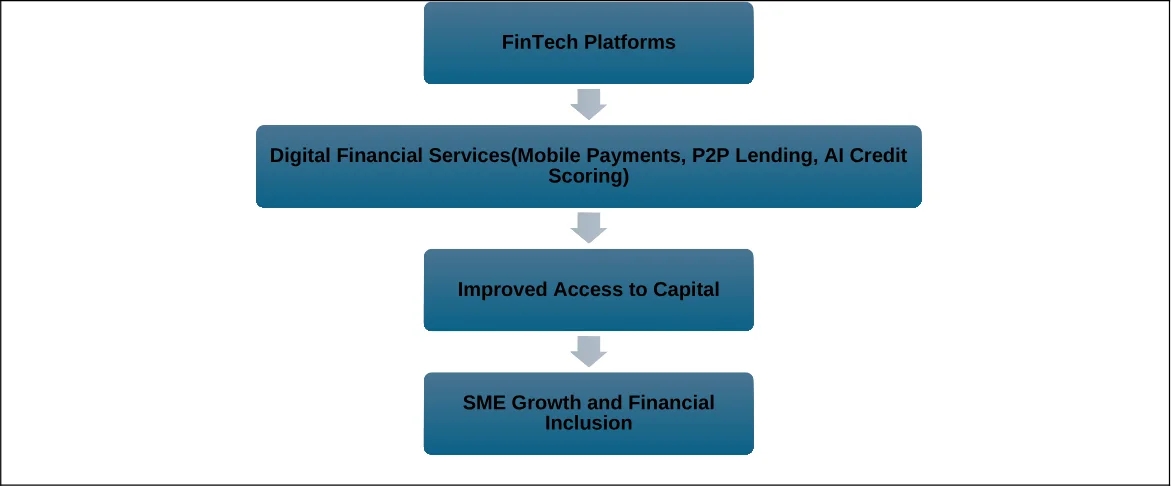
This paper focuses on the correlation between digital credit score, financial discipline and loan performance in the commercial banks of Bangladesh. The study is driven by the increased application of digital technologies in the banking industry and especially in credit assessment, and the desire to know the effects of digital technologies on borrower behavior and quality of loans. The research design that was adopted was quantitative and primary data were obtained using 108 banking professionals who work in credit related departments of commercial banks in Bangladesh. The researchers employed descriptive statistics and regression analysis to assess the impact of credit risk management practice and digital credit scoring on the performance of the loan portfolio. The results indicate that good credit risk management dimensions particularly credit appraisal, credit monitoring, credit approval process and loan recovery management have much positive impact on the performance of loan portfolios. The comparative analysis also shows that the private commercial banks have lower non-performing loans ratios as well as strong capital adequacy positions compared to state-owned commercial banks implying that the former control their risks better. It is also observed in the study that digital credit scoring is capable of enhancing financial discipline due to the ability to better evaluate borrowers, increase repayment behavior, and decrease the risk of default. In general, it can be concluded that adoption of digital credit scoring, coupled with good credit risk management practices, can enhance the quality of loan portfolio and enhance banking stability in Bangladesh. The work has practical implications to the banks and the regulators interested in updating the credit assessment models and decreasing the number of non-performing loans in a more digitalized financial setting.
Research ArticleCredit Risk and BankingAccepted
Digital Credit Scoring, Financial Discipline, and Loan Performance: Evidence from Commercial Banks in Bangladesh
Correspondence: salmanmamun65@gmail.com
Abstract
Keywords Digital credit scoringFinancial disciplineLoan performanceCredit risk managementCommercial banks in Bangladesh
Introduction
The contribution of commercial banks to the economic development cannot be overemphasized, especially in the economies that are yet to undergo full financial inclusion like the developing economies like Bangladesh. Conventionally, banks have helped the economy, as they serve as middlemen in the economy, by mobilizing the capital of depositors to investors, and hence leading to increased investment and business expansion. Nevertheless, during recent years, the blistering development of digital technologies changed the picture of financial services especially with credit scoring. A major change in this respect has been the use of digital credit scoring, which uses big data, machine learning and alternative data sources to enhance the accuracy and efficiency of loan assessments(Kiarie, n.d.) (Kowsar et al., 2023a).
In Bangladesh, digital financial services adoption has attained high intensity owing to the growing acceptance of mobile phones and access to internet. Online financial services like bKash, Nagad, and Rocket have also been at the centre of strengthening financial inclusion, especially among the underserved population in rural regions. These platforms allow consumers to access financial products that they did not have access to in the past like microloans and savings account hence availing economic opportunities to people and small businesses. Although there are these advancements, there are still challenges that are involved in ensuring that these technologies are manipulated efficiently in the effort to ensure that the financial discipline of the borrowers are upheld and the loan performance is enhanced(Kowsar et al., 2023b) (Sharif, 2024).
By introducing digital credit rating systems in the activities of commercial banks, the improvement of the performance of loans is possible since it introduces a more objective and data-driven method of assessing the creditworthiness. The aim of the paper is to understand the effects of digital credit scoring on financial discipline and consequently on performance of loans in Bangladesh commercial banks. In particular, it will look into ways these digital systems would enhance the repayment behavior, decrease the number of non-performing loans (NPLs), and promote sustainable financial practices within the group of borrowers. The paper shall also determine how digital credit scoring can be used to close the existing disparities between conventional credit scoring and the ever-increasing need to use inclusive money products(Min, n.d.).
Although digital credit scoring has been praised on its ability to increase access to credit, it has also cast doubt on whether or not it can be effective in enhancing the performance of loans. As an example, even though those systems can provide more inclusive and faster credit decisions, they also introduce the issue of data privacy, algorithmic bias, and regulation (Dona, n.d.).
As such, not only is the importance of digital credit scoring in terms of its influence on the performance of a loan crucial but also the extent to which it is consistent with financial discipline on the institutional and consumer level. The study seeks to address a gap in the literature because it intends to provide an empirical analysis of how digital credit scoring affects the financial discipline and performance of loans in the backdrop of the Bangladesh commercial banking sector.
2. Theoretical Background and Literature Review
The Banking Sector plays an important role in economic development, which is why it must be identified in this paper as well.
Banking industry is core to economic growth because it engages financial resources and directs them towards other economic sectors that are productive. The commercial banks in the developing countries create the most form of financial intermediation, which makes capital formation, investment growth, and economic growth possible. An effective banking system is also stable, and it aids in stabilizing the financial system and ensuring a sustainable economic development due to the availability of credit to households and businesses(Sharif, 2024). The financial system in Bangladesh is mainly bank-based and much of financial intermediation is done by the commercial banks. The banking sector organizes household deposits and injects them into loans to other sectors like the agriculture, industry, small and medium enterprises (SMEs) and trade.
This is a very important role and hence the performance and stability of banks plays a significant role in the overall economic development of the country. Nevertheless, the Bangladesh banking sector has a number of issues, such as a significant number of non-performing loans, ineffective allocation of credit, and ineffective credit monitoring systems(Uddin, 2024). Risk management especially credit risk management is a critical factor in legalizing the financial stability of banks. The loans and advances are the largest sources of earning of banks and the quality of these assets directly influences the level of profitability and sustainability of banks. Therefore, the capacity of banks to access the credit worthiness of borrowers, and track the behavior of loan repayment is a very significant factor in determining the performance of banks.
2.2 Credit risk and Loan performance.
The credit risk can be defined as the risk which is taken by the banks when the borrowers default on their repayment obligations in line with the agreed terms of a loan contract. It is ranked among the greatest threats in banks due to the fact that loans represent the biggest fraction of bank resources. The assessment of credit, ineffective monitoring, and weak recovery mechanisms may result in an increment of default risk as well as poor performance of the loan portfolio(Barua, 2023).
A number of studies note the significance of credit risk management in enhancing the performance of loan portfolio.The credit risk management practices to study its effect on the performance of loan portfolios in Bangladesh commercial banks. With survey data of employees in credit risk management units of 21 commercial banks, the research employed structural equation modeling in order to examine the relationship between credit risk management practices and the performance of loans. The results show that credit policy, loan appraisal processes and mechanisms of recovering loans have a great impact on the quality of loan portfolios. The paper concludes that well organized credit risk management structures are fundamental in reduction of loan default and optimization of banking performance(Barua, 2023).
In like manner, Sharif et al. (2024) examined the effect of credit risk indicators on the financial performance of the listed commercial banks in Bangladesh through a panel data analysis. The analysis established that non-performing loans have a negative impact on the profitability of banks whereas capital adequacy ratio has a positive impact on the financial performance. The study indicates that credit risks need to be monitored effectively and have capital buffers in place in order to guarantee the long-term sustainability of banks(Sharif, 2024).
2.3 Financial Stability and Non- Performing Loans.
One of the most important credit risk indicators in the banking sector is non- performing loans (NPLs). A loan is considered non-performing when a borrower does not pay his principal or interest within a given duration of time usually 90 days. A high amount of NPLs undermines bank profitability, liquidity, and restricts the capacity of the banks to issue new credit to the borrowers.
NPLs have been a thorn in the flesh of most economies, particularly the developing ones such as Bangladesh. A report by Akhter (2023) reveals that non-performing loans in the banking industry in Bangladesh have been on the constant rise in the last decade. Based on the panel data of 30 commercial banks in 2011 2020, the research established that the level of NPLs is determined by both the bank-specific and macroeconomic variables. The accumulation of problem loans is influenced by such factors as capital adequacy ratio, the return on equity, inflation and economic growth to a significant degree. The paper concludes that more credit risk control and regulatory oversight are required to decrease the level of NPLs and provide more robust banking system(Akhter, 2023).
The consequences of non-performing loans in Bangladesh were investigated by Amir and Choudhury (2023) on the lending behavior of banks. The authors of the research analyzed the data of fifteen private commercial banks in 2012-2021 and established that an increase in NPL ratio has a significant negative impact on credit growth. An increase in bad loans makes increases the lending policies of banks towards the conservative and it limits access to credit in the economy. The phenomenon has adverse impacts on the investment activities and economic development(Amir & Choudhury, 2023).
The NPL levels are also high, which predisposes the bank to bankruptcy as it cuts down interest payments and provisioning levels. To ensure financial stability therefore, credit risk monitoring and early identification of troubled loans are crucial elements in ensuring financial stability.
2.4 Banking Digital Transformation.
This is due to the fast development of information and communication technologies which have greatly changed the banking industry across the world. Digital banking services such as mobile banking, internet banking, and electronic payment systems have enhanced effectiveness and access of financial services. Digital financial technologies in Bangladesh have increased financial inclusion because people who were not previously banked can get banking services (Kumar Sarker et al., 2024).
The emergence of smartphones and mobile financial services platforms (including bKash, Rocket, and Nagad) has seen the adoption of mobile banking services in Bangladesh in particular. Sarker et al (2024) argue that the mobile banking services have made a positive impact on the financial performance of commercial banks through its role in enhancing the volume of transactions and its coverage of the customer base. The paper established that operational efficiency and the cost of transacting business improves among banks due to technological innovation(Kumar Sarker et al., 2024).
In addition, digital transformation has also given new prospects in enhancing the credit risk assessment by utilizing data analytics and financial technology tools. Online sites enable banks to receive high amounts of data about customers that can be utilized to assess creditworthiness.
The study by Hasan et al. (2025) investigated how digitalization, corporate social responsibility, and green finance affect the performance of Bangladesh banks(Masrick Hasan et al., 2025).
2.5 Digital Credit Scoring and Artificial Intelligence.
The recent development in financial technology has brought on board artificial intelligence (AI) and machine learning methods in the credit assessment. The conventional credit scoring systems use historical financial records and rudimentary statistical tools as the major means of assessing the creditworthiness of a borrower. But, AI-based credit scoring engines rely on sophisticated algorithms and big data to create better risk rating.
Given the multi-source information, such as financial history, transaction history, social data, and behavioral information, Zhang (2025) points out that AI-based credit scoring systems assess credit risk more efficiently. These systems involve a procedure of data fusion, feature extraction, and model iteration in order to keep up the accuracy of credit evaluation. Consequently, banks will be able to make better loaning decisions and decrease the risk of loan loss (Zhang, n.d.).
The credit scoring developed with AI also helps banks to increase financial inclusivity by allowing individuals and small businesses with limited access to credit history to access credit. But there are also some problems concerning the implementation of AI in credit scoring and the transparency of algorithms, their data privacy, and the potential bias in decision-making. As Zhang (2025) points out, there is need to have proper regulatory frameworks in order to make sure that AI technologies are responsibly implemented in banking systems(Zhang, n.d.).
2.6 Research Gap
Despite the fact that the issue of credit risk management, non-performing loans and financial performance of banks in Bangladesh has been a subject of numerous studies, it is clear that comparatively fewer studies have been conducted to provide an insight on how digital credit scoring technologies have impacted the performance of loans and borrowers. Current studies mainly emphasize on conventional credit risk measures including NPL ratio, capital sufficiency and profitability measures.
Also, there is a dearth of empirical research on the impact of digital credit scoring on financial discipline and repayment behavior of borrowers in developing nations. With the ever-growing digital banking technologies in Bangladesh, one should learn how the innovations affect the credit risk management and quality of their loan portfolios.
Thus, this paper will address this gap by providing an analysis of the correlation between digital credit scoring, financial discipline and loan performance among the commercial banks in Bangladesh. Combining both the research on credit risk management theory and financial technology, the study will give a versatile idea of how digital credit assessment systems can influence the performance of the bank and the financial stability.
3. Conceptual Framework
This conceptual framework describes the connection that exists between digital credit scoring, financial discipline, and performance of loans in the commercial banks in Bangladesh. It is based on the credit risk management theory and literature on the adoption of financial technology. It hypothesizes that digital credit scoring systems affect the financial behavior of the borrowers and lead to better loan performance through the more precise assessment of credit and monitoring systems.
3.1 Digital Credit Scoring
Digital credit scoring Digital credit scoring is the application of new technologies, like artificial intelligence, machine learning, and big data analytics, to assess the creditworthiness of borrowers. In contrast to the traditional system of credit scoring that uses majorly financial statements and previous credit score history, digital credit scoring uses various sources of credit data such as transaction history, digital behavior, and other financial information.
Credit scoring models that use artificial intelligence help banks to process huge amounts of data and extract patterns that can be used to predict credit risk. Such systems enhance precision in credit assessment and decrease information asymmetry existing between the lenders and the borrowers. Zhang (2025) also describes the work of AI-driven credit scoring systems, their operation is based on several processes, including data fusion, feature extraction, and model adaptation that enables banks to advance their efficiency in credit risk judgment continuously(Zhang, n.d.).
Digital credit scoring decreases the chances of lending to high-risk borrowers, as well as enhances the quality of the loan portfolio of banks, through more precise borrower assessment. Consequently, the implementation of the digital credit scoring technologies is likely to result in the improvement of the loan repayment rates and lessening of the non-performing loans rate.
3.2 Financial Discipline
Financial discipline is the sound financial conduct of the borrowers in handling their debts and repaying them as it is required by the agreed loan terms. Financially well-disciplined borrowers tend to repay their loans in a good time and have their financial management habits in check and not becoming high borrowers.
Borrowers can be indirectly helped to be more financially disciplined by the adoption of digital credit scoring systems. Knowing that banks have advanced digital systems to assess their borrowing behavior, the borrower will have more incentive to ensure that their repayment records are good. Besides, the online monitoring tools enable the banks to monitor the borrower activities and detect the repayment risk at its initial stages.
According to the previous research, systems of credit monitoring and assessment of borrowers are of significance in mitigating default risks. Barua and Amin (2023) note that credit appraisal and credit monitoring systems are key elements in enhancing good loan portfolio performance through ensuring that borrowers meet loan repayment requirements(Barua, 2023).
Hence, the financial discipline is a significant behavioral variable that connects digital credit scoring with better loan performance.
3.3 Loan Performance
Loan performance can be defined as the capability of the borrowers to repay loans on the timetable and on the general quality of the loan portfolio of the bank. The indicators of high loan performance are low non-performing loan levels, constant repayment rates and better quality of assets.
One of the greatest risks to the banking industry is non- performing loans since they hamper the profitability of the bank and limit the lending process. Akhter (2023) discovered that the financial stability and performance of commercial banks are deteriorated with the increasing levels of non-performing loans in Bangladesh(Akhter, 2023).
In line with this, Amir and Choudhury (2023) found that greater NPL ratios had a strong negative impact on credit growth and deter banks to increase their lending operations(Amir & Choudhury, 2023).
The loan defaults can be addressed by enhancing the credit risk assessment mechanisms, e.g., digital credit scoring which can help in assessing the high-risk borrowers prior to loan approval. These systems together with good financial discipline of borrowers will help in improved performance of loan portfolio as well as stability in the banking as a whole.
3.4 Proposed Conceptual Model
According to the theoretical arguments and the results of the existing research, this study hypothesizes that digital credit scoring affects the performance of the loans both directly and indirectly by being a source of financial discipline.
According to the conceptual framework, it is assumed that:
Online credit rating enhances the process of borrower screening and risk determination.
Better risk assessment will promote better financial discipline by borrowers.
Good financial discipline contributes to the repayment of loans and the lessening of non-performing loans.
As such, financial discipline is a type of mediating variable between digital credit score and lending performance.
Conceptual Model
Besides these basic relationships, other control variables may determine the level of performance of a loan, these variables include the amount of the loan, income of the borrower, interest rate, and loan tenure.
This theoretical framework offers the theoretical background of studying the role of digital credit scoring technologies in enhancing financial discipline and loan performance in the banking industry of Bangladesh.
3.5. Hypothesis Development
Modern banking systems have shifted credit evaluation over to digital technologies. Digital credit scoring enhances the accuracy of the assessment of borrowers through sophisticated data analytics and artificial intelligence that enable borrowers to be assessed with a greater degree of precision by banks. This enhances the lending decisions and can impact the financial behaviour of the borrowers.
Research shows that the quality of loans as well as non-performing loans, decreases with the presence of effective credit risk management systems(Barua, 2023).
In the same vein, the study of Bangladeshi banks reveals that a greater proportion of non-performing loans has a detrimental impact on the business stability and profitability of banks (Akhter, 2023).
Online credit scoring may thus promote financial discipline amongst borrowers and increase the performance of loans. Based on these theoretical arguments, it is proposed that the following hypotheses will be tested:
H1: Digital credit scoring has a positive effect on the financial discipline of borrowers.
H2: Digital credit scoring has a positive impact on the performance of the loan.
H3: Financial discipline has a positive impact on the performance of loans.
H4: Financial discipline mediates the association between digital credit scoring and loan performance.
H5: Digital credit scoring lowers the number of non-performing loans and enhances the quality of the entire portfolio of loans.
4. Research Methodology
The research design embraced in this study is quantitative research design in order to investigate the correlation between digital credit scoring, financial discipline and loan performance in commercial banks in Bangladesh. Quantitative research has become quite popular in banking and financial research to test hypothesized relationships between variables statistically. The study is of deductive nature, as hypotheses formulated based on known theories and literature are currently tested on the basis of gathered data. Similarly, the methodological techniques have been applied in past studies on banking and finance to investigate credit risk and loan performance in financial institutions(Alvi et al., 2024).
The research is based on the primary data, which is gathered by the use of a structured questionnaire. The data is analyzed using statistical techniques and also to test which relationships exist between the research variables. The methodology entails data collection protocols, questionnaire design and sampling methods applied in the study.
4.1 Data Collection
Primary sources were used as the major data gathering method on this study by use of questionnaire survey. The participants were workers at commercial banks in Bangladesh especially the ones in the credit risk management, loan processing and financial analysis units. These respondents will be credit officers, loan officers, risk managers and branch managers, who have hands-on experience regarding credit assessment procedures and loan surveillance systems.
The questionnaire was administered online and in hardcopy version to have a broader reach of the respondents. The interview of banking professionals will be effective in gathering the data about the utilization of the digital credit scoring systems and its impact on the financial discipline of the borrowers and the performance of the loans.
Besides primary data, secondary data through academic articles, financial reports and prior research studies were examined to help in supporting the theoretical framework and literature review of the study. It has been observed in past research that credit risk and loan performance are the most important aspects which influence the stability of financial institutions and the entire banking industry(Dunyoh et al., n.d.).
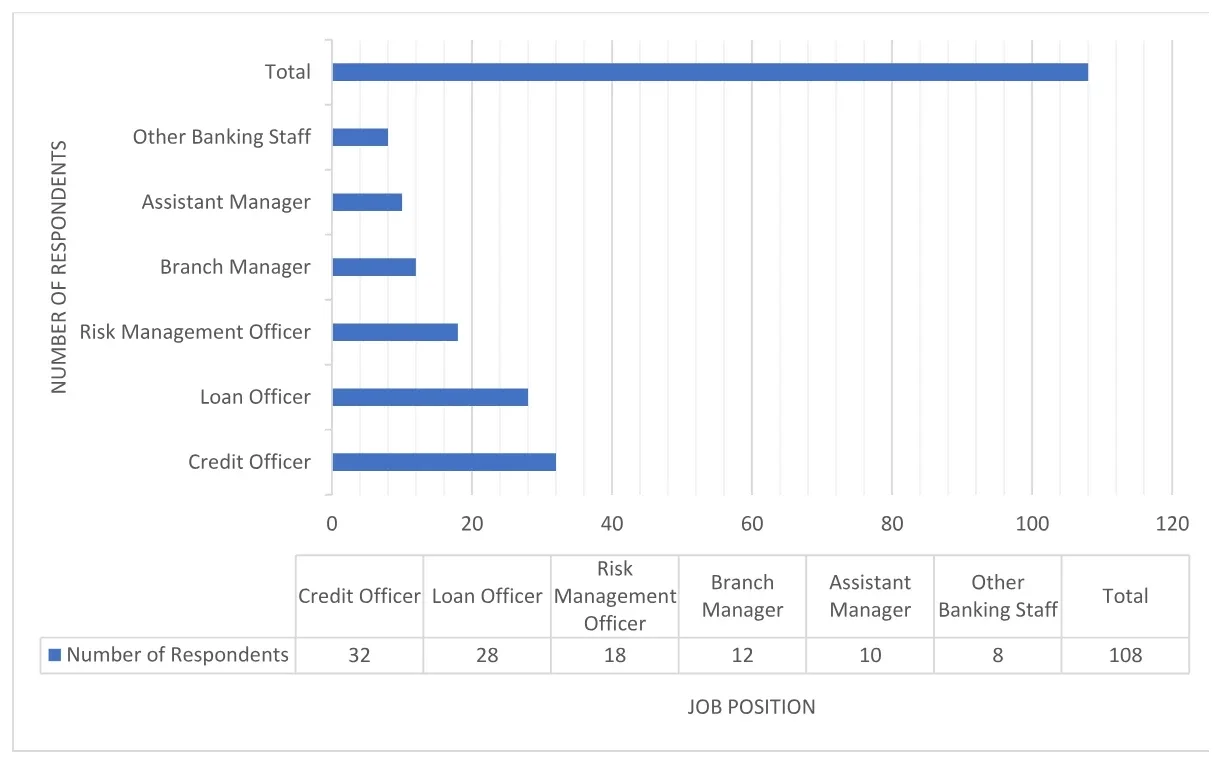
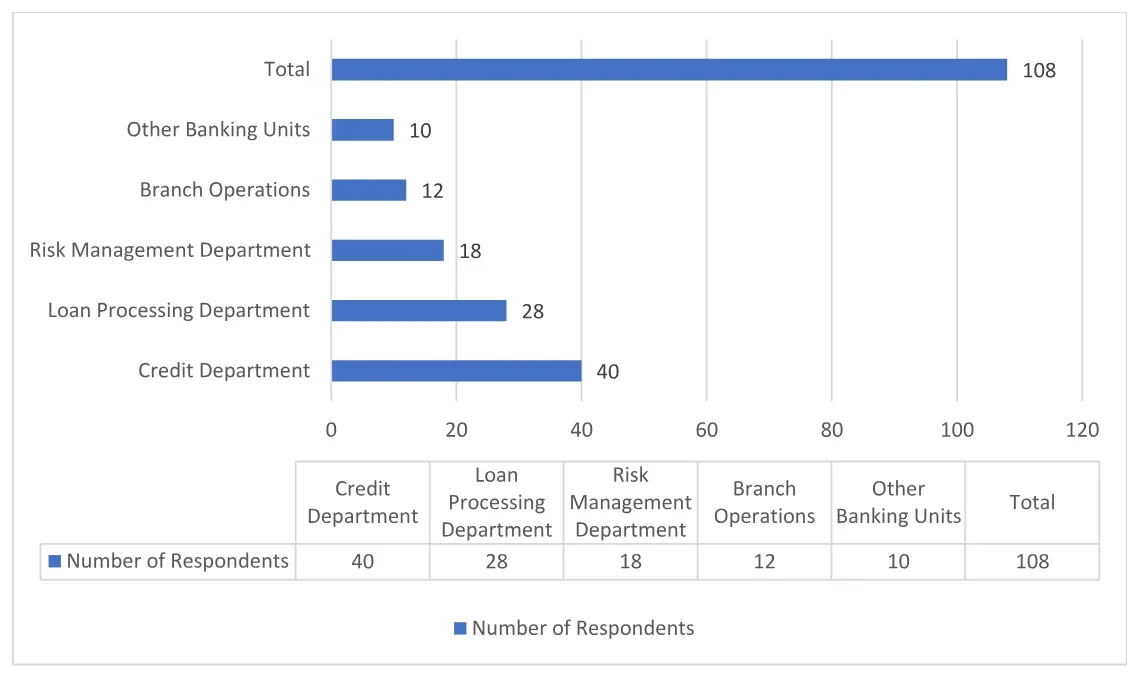
Figure 1 demonstrates how the respondents are distributed based on their job positions in the commercial banks. Most of the respondents are credit officers (32) and loan officers (28) with risk management officers (18) coming in third. Branch managers and assistant managers as well as other banking personnel take up minor percentages in the sample. This dispersion shows that majority of the respondents are directly involved in credit evaluation and loan monitoring practices which increases the accuracy of the data obtained.
4.2 Questionnaire Design and Analysis
The research questionnaire was developed according to the prior investigations on the matters of credit risk management, financial discipline, and digital banking technologies. The questionnaire will have two primary sections.
The initial part will comprise some general details about the respondents including the job position, experience in the banking industry and the department. This part will assist in the realization of the professional experience of the respondents and their engagement in credit-related activities
The second section contains the statements as far as the obligatory variables of the study are concerned: digital credit scoring, financial discipline and loan performance. These statements were measured on a five-point Likert scale produced between strongly disagree and strongly agree. The Likert scale is often utilized in the social science research to quantify perceptions and attitudes on particular issues.Following the collection of data, the responses were coded and analyzed in the statistical software like SPSS. The characterization of the respondents was summarized using descriptive statistics, whereas such inferential statistical methods as correlation and regression analysis were used to test the research hypotheses and compare the relationships between the variables in the study.
4.3 Sample Design
The study objectives will be to target a sample population comprised of employees in commercial banks in Bangladesh that are directly involved in credit assessment and loan administration processes. It is believed that these individuals are the right respondents since they have a working experience in terms of credit evaluation and loans performance.
The sampling method was purposive to choose those respondents who have the important knowledge and professional experiences in banking operations. In purposive sampling, respondents are chosen deliberately depending on their skills and capability of giving experiences that will be significant to the topic being studied.
The participants of the study were about 100-150 respondents who participated in various commercial banks in Bangladesh, both privately owned and state owned commercial bank. This is a sufficient sample size as used in quantitative research in order to perform statistical analysis and hypothesis testing.
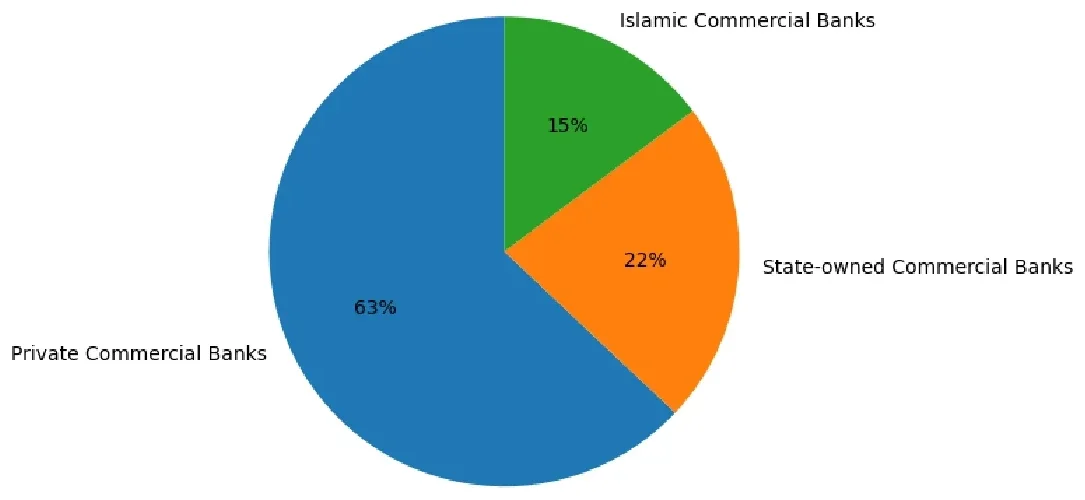
This pie chart shows that most respondents are from private commercial banks, which dominate the banking sector in Bangladesh.
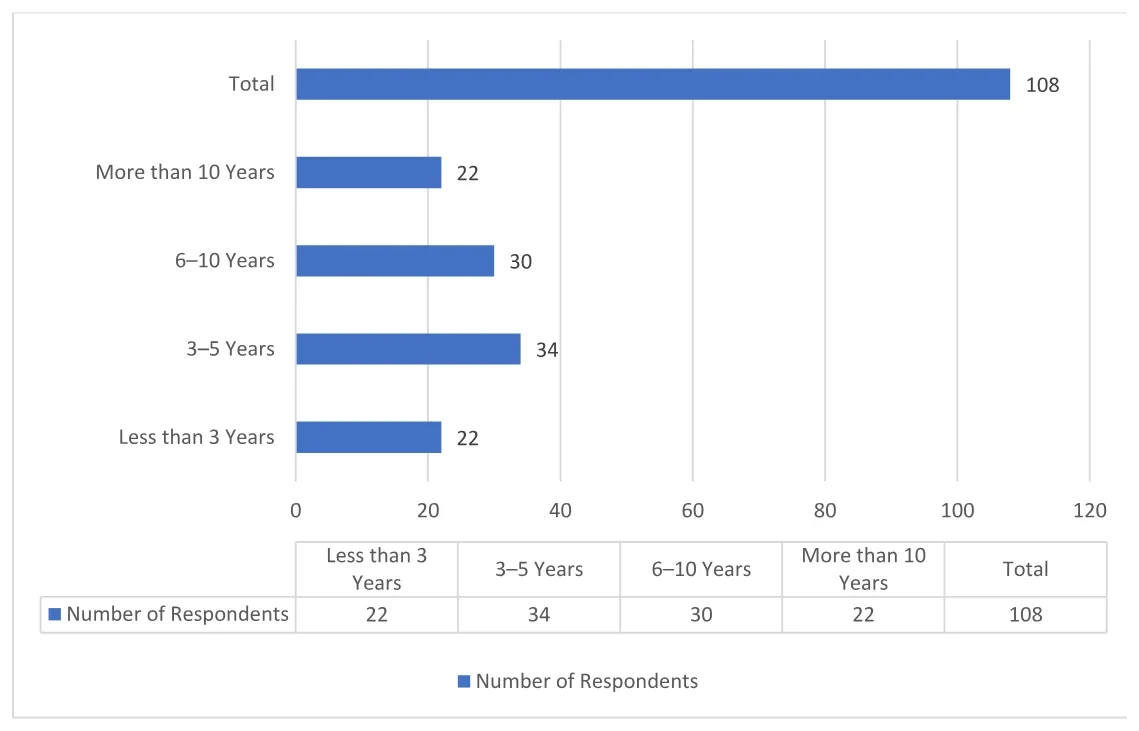
The study population will be 108 people, those employed in various commercial banks in Bangladesh. Most of the respondents (63%) are of private commercial banks, with the rest being state-owned banks (22%), and Islamic banks (15%). With respect to the distribution in the department, majority of the respondents fall in the credit and loan processing department meaning that they will be directly involved in credit evaluation and loan monitoring operations. When it comes to work experience, a considerable percentage of the respondents have three to ten years of banking experience, which means that the respondents are experienced employees in terms of the professional knowledge related to credit management and loan performance.
4.4 Measurement of Variables
The paper will analyze the connection between digital credit rating, financial discipline and loan performance in Bangladesh commercial banks. The measurement of the variables is done with references to the available banking and financial research. Digital credit scoring can be interpreted as the application of digital technologies and data analytics to credit assessment, whereas the financial discipline can be defined as a responsible behavior of borrowers in repaying their debt. Loan performance is a quality of loan portfolio and repayment results of the bank.
Table 1. shows the measurement of variables to be used in this study.
| Variable Type | Variable | Symbol | Measurement Method |
|---|---|---|---|
| Independent Variable | Digital Credit Scoring | DCS | Measured using Likert scale statements on the use of digital systems, AI-based credit evaluation, and automated risk assessment |
| Mediating Variable | Financial Discipline | FD | Measured using Likert scale statements on repayment behavior, loan monitoring, and borrower financial responsibility |
| Dependent Variable | Loan Performance | LP | Measured through indicators such as repayment performance, reduction of default loans, and quality of loan portfolio |
| Control Variable | Borrower Income | BI | Respondent perception regarding borrower income stability affecting repayment |
| Control Variable | Loan Size | LS | Perception of loan amount influencing repayment capacity |
| Control Variable | Interest Rate | IR | Respondent perception on interest rate impact on loan repayment |
These variables help analyze how digital credit scoring influences financial discipline and how both factors affect loan performance in commercial banks.
4.5 Econometric / Regression Model
In the analysis of the associations among the study variables, regression analysis is used in this research. It is evident that regression analysis has found application in banking and other studies of the financial field to establish how independent variables influence dependent variables. It enables the researchers to approximate the size and direction of relationships between the variables and test the hypotheses put forward.
The general regression model used in this study is expressed as follows:
LP=β_0+β_1DCS+β_2FD+β_3BI+β_4LS+β_5 IR+ε
Where:
LP = Loan Performance
DCS = Digital Credit Scoring
FD = Financial Discipline
BI = Borrower Income (control variable)
LS = Loan Size (control variable)
IR = Interest Rate (control variable)
β₀ = Intercept
β₁ – β₅ = Regression coefficients
ε = Error term
To further examine the mediating effect of financial discipline, the following additional regression equations are used:
Model 1: Effect of Digital Credit Scoring on Financial Discipline
FD=β_0+β_1 DCS+ε
Model 2: Effect of Financial Discipline on Loan Performance
LP=β_0+β_1FD+ε
Model 3: Combined Model
LP=β_0+β_1 DCS+β_2FD+ε
These regression models help evaluate the direct and indirect relationships between digital credit scoring, financial discipline, and loan performance. Similar econometric approaches are widely used in financial research to analyze credit risk and banking performance relationships(Alvi et al., 2024).
5. Findings and Analysis
5.1 Descriptive Statistics
5.1.1 Gender
This subsection reports the gender distribution of the respondents involved in credit-related activities in commercial banks.
Table 2. Gender
| Gender | Frequency | Percent | Valid Percent | Cumulative Percent |
|---|---|---|---|---|
| Male | 74 | 68.5 | 68.5 | 68.5 |
| Female | 34 | 31.5 | 31.5 | 100.0 |
| Total | 108 | 100.0 | 100.0 | — |
5.1.2 Age
The age profile indicates that a large share of respondents are in their early to mid-career stage.
Table 3. Age of respondents
| Age Group | Frequency | Percent | Valid Percent | Cumulative Percent |
|---|---|---|---|---|
| 20–29 Years | 28 | 25.9 | 25.9 | 25.9 |
| 30–39 Years | 46 | 42.6 | 42.6 | 68.5 |
| 40–49 Years | 22 | 20.4 | 20.4 | 88.9 |
| 50 Years and Above | 12 | 11.1 | 11.1 | 100.0 |
| Total | 108 | 100.0 | 100.0 | — |
5.1.3 Experience
Most respondents have several years of experience in banking operations, especially in credit management.
Table 4. Level of Experience
| Experience | Frequency | Percent | Valid Percent | Cumulative Percent |
|---|---|---|---|---|
| Less than 3 Years | 22 | 20.4 | 20.4 | 20.4 |
| 3–5 Years | 34 | 31.5 | 31.5 | 51.9 |
| 6–10 Years | 30 | 27.8 | 27.8 | 79.6 |
| More than 10 Years | 22 | 20.4 | 20.4 | 100.0 |
| Total | 108 | 100.0 | 100.0 | — |
5.1.4 Most Vital Component of Credit Risk
Respondents identified repayment capacity and credit history as key components of credit risk evaluation.
Table 5. Which component of credit risk do you think is the most vital one to be considered in a bank’s loan portfolio?
| Component | Frequency | Percent | Valid Percent | Cumulative Percent |
|---|---|---|---|---|
| Borrower Repayment Capacity | 38 | 35.2 | 35.2 | 35.2 |
| Credit History | 26 | 24.1 | 24.1 | 59.3 |
| Collateral Value | 22 | 20.4 | 20.4 | 79.6 |
| Financial Statements | 14 | 13.0 | 13.0 | 92.6 |
| Economic Conditions | 8 | 7.4 | 7.4 | 100.0 |
| Total | 108 | 100.0 | 100.0 | — |
5.1.5 Preferred Credit Risk Management Dimension
Respondents emphasized credit appraisal and monitoring as important dimensions of credit risk management.
Table 6. Which dimension of credit risk management should be preferred?
| Dimension | Frequency | Percent | Valid Percent | Cumulative Percent |
|---|---|---|---|---|
| Credit Appraisal | 36 | 33.3 | 33.3 | 33.3 |
| Credit Monitoring | 30 | 27.8 | 27.8 | 61.1 |
| Credit Approval | 20 | 18.5 | 18.5 | 79.6 |
| Loan Recovery | 14 | 13.0 | 13.0 | 92.6 |
| Risk Reporting | 8 | 7.4 | 7.4 | 100.0 |
| Total | 108 | 100.0 | 100.0 | — |
5.1.6 Significant Factors Concerning Preventive Measures of CRM
Preventive CRM measures help banks reduce credit default risk before it occurs.
Table 7. If preventive measures should be preferred, then which factor is the most important one?
| Preventive Measure | Frequency | Percent | Valid Percent | Cumulative Percent |
|---|---|---|---|---|
| Proper Borrower Evaluation | 40 | 37.0 | 37.0 | 37.0 |
| Loan Monitoring | 28 | 25.9 | 25.9 | 63.0 |
| Digital Credit Scoring | 18 | 16.7 | 16.7 | 79.6 |
| Risk Diversification | 12 | 11.1 | 11.1 | 90.7 |
| Internal Control System | 10 | 9.3 | 9.3 | 100.0 |
| Total | 108 | 100.0 | 100.0 | — |
5.1.7 Significant Factors Concerning Curative Measures of CRM
Curative measures address credit problems after loans become distressed.
Table 8. If curative measures should be preferred, then which factor is the most important one to minimize post-sanction loan losses?
| Curative Measure | Frequency | Percent | Valid Percent | Cumulative Percent |
|---|---|---|---|---|
| Loan Restructuring | 34 | 31.5 | 31.5 | 31.5 |
| Legal Recovery | 28 | 25.9 | 25.9 | 57.4 |
| Loan Rescheduling | 22 | 20.4 | 20.4 | 77.8 |
| Asset Liquidation | 14 | 13.0 | 13.0 | 90.7 |
| Write-off Policy | 10 | 9.3 | 9.3 | 100.0 |
| Total | 108 | 100.0 | 100.0 | — |
5.1.8 Security for Loans and Advances Recovery
Banks rely on different types of collateral to secure loans.
Table 9. Which category of security is better for the recovery of loans and advances?
| Security Type | Frequency | Percent | Valid Percent | Cumulative Percent |
|---|---|---|---|---|
| Land & Property | 40 | 37.0 | 37.0 | 37.0 |
| Cash Collateral | 24 | 22.2 | 22.2 | 59.3 |
| Personal Guarantee | 18 | 16.7 | 16.7 | 75.9 |
| Hypothecation of Assets | 16 | 14.8 | 14.8 | 90.7 |
| Other Securities | 10 | 9.3 | 9.3 | 100.0 |
| Total | 108 | 100.0 | 100.0 | — |
5.1.9 Factors Affecting Fixation of Margin on Loan
Banks determine loan margins based on borrower risk and collateral value.
Table 10. Fixation of margin on loan depends on which of the following factor?
| Factor | Frequency | Percent | Valid Percent | Cumulative Percent |
|---|---|---|---|---|
| Borrower Creditworthiness | 36 | 33.3 | 33.3 | 33.3 |
| Collateral Value | 28 | 25.9 | 25.9 | 59.3 |
| Loan Purpose | 20 | 18.5 | 18.5 | 77.8 |
| Market Conditions | 14 | 13.0 | 13.0 | 90.7 |
| Regulatory Policy | 10 | 9.3 | 9.3 | 100.0 |
| Total | 108 | 100.0 | 100.0 | — |
5.1.10 Credit Approval Authority
Different levels of management are responsible for approving loans depending on loan size and risk level.
Table 11. Should credit approval authority be delegated to individual executives or to the higher authority (i.e., Head of CRM or Board of Directors) to minimize credit risk?
| Authority | Frequency | Percent | Valid Percent | Cumulative Percent |
|---|---|---|---|---|
| Branch Manager | 32 | 29.6 | 29.6 | 29.6 |
| Credit Committee | 28 | 25.9 | 25.9 | 55.6 |
| Head Office | 22 | 20.4 | 20.4 | 75.9 |
| Risk Management Division | 16 | 14.8 | 14.8 | 90.7 |
| Board of Directors | 10 | 9.3 | 9.3 | 100.0 |
| Total | 108 | 100.0 | 100.0 | — |
5.2 Comparative Analysis of Loan Performance and Capital Adequacy of Banks
The financial stability of commercial banks is measured with the help of such indicators as loan performance and capital adequacy. The Non-Performing Loan (NPL) ratio is a ratio that demonstrates the quality of the loan portfolio of the borrowers unable to repay their loan. The higher the NPL ratio, the worse the performance of the loans and the higher the risk of the credit. By comparison, Capital Adequacy Ratio (CAR) determines the capacity of a bank to take in financial losses and still remain stable.
The NPL ratios of state owned commercial banks in Bangladesh are usually high as compared to those of privately owned commercial banks because of the less effective loan monitoring and recovery procedures. The level of credit risk management is generally more robust as seen in the private commercial banks with lower NPL ratios and high CAR.
Table 12. Comparative Analysis of Loan Performance and Capital Adequacy of Banks
| Bank Name | NPL (%) | CAR (%) | Bank Name | NPL (%) | CAR (%) |
|---|---|---|---|---|---|
| Sonali Bank | 18.5 | 11.2 | Islami Bank Bangladesh | 4.5 | 14.0 |
| Janata Bank | 16.9 | 10.8 | City Bank | 3.7 | 13.6 |
| Agrani Bank | 14.7 | 11.5 | Bank Asia | 3.4 | 14.2 |
| Rupali Bank | 13.8 | 12.1 | Southeast Bank | 3.9 | 13.9 |
| BASIC Bank | 15.4 | 10.3 | Mutual Trust Bank | 3.1 | 14.7 |
| BRAC Bank | 3.2 | 13.5 | Standard Bank | 4.6 | 13.1 |
| Dutch-Bangla Bank | 3.8 | 14.1 | Al-Arafah Islami Bank | 4.3 | 13.4 |
| Eastern Bank | 2.9 | 15.2 | Dhaka Bank | 3.6 | 14.5 |
| Prime Bank | 4.1 | 13.8 | Pubali Bank | 3.8 | 13.7 |
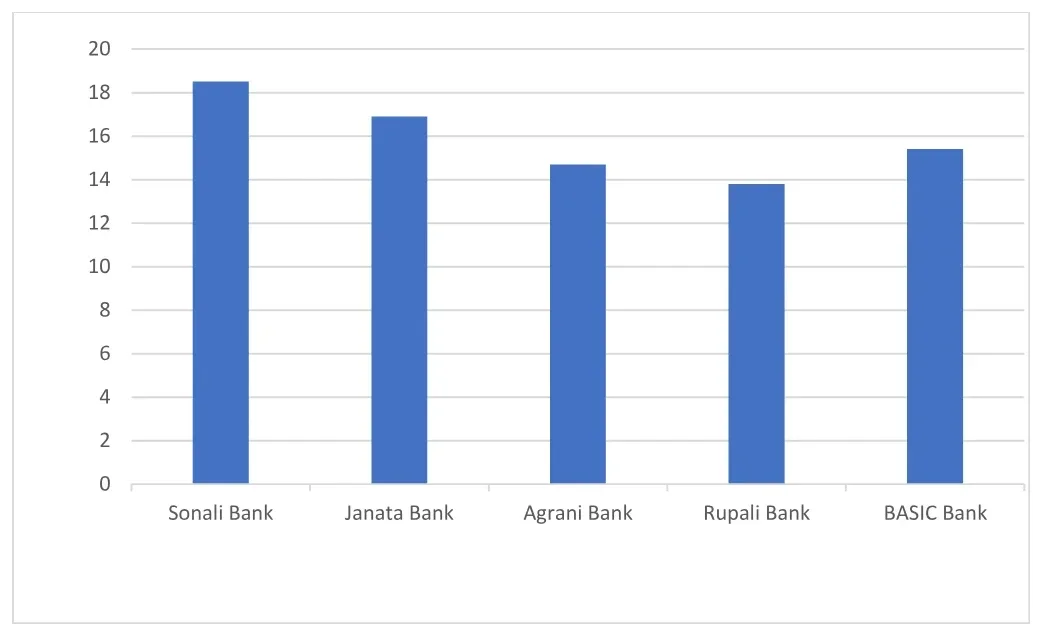
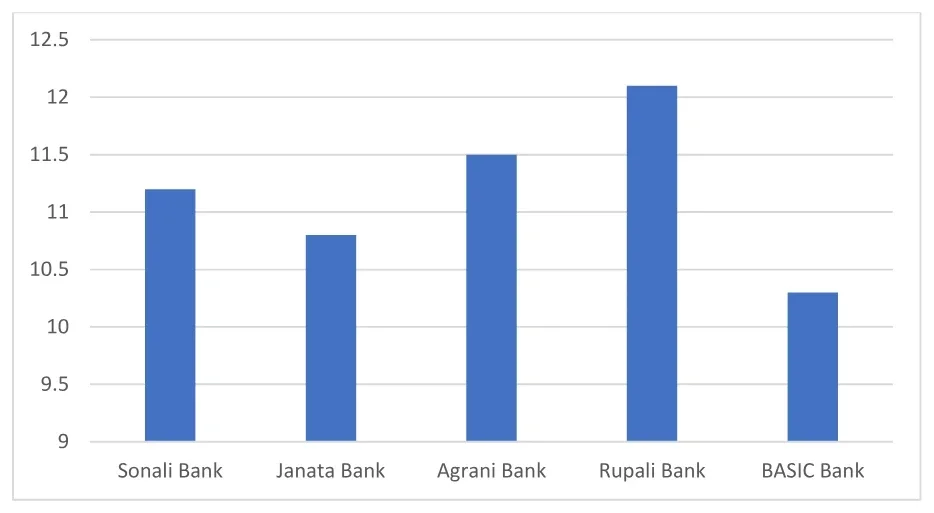
The table shows that state-owned banks like Sonali Bank, Janata Bank, Agrani Bank, Rupali bank, and BASIC Bank have a high ratio of NPLs as compared to privately owned banks. Nonetheless, majority of the banks uphold capital adequacy within higher capital regulation requirements imposed by Bangladesh bank.
This number shows that Sonali bank has the highest ratio of NPL compared to other state owned banks, and this shows that the bank is more vulnerable to credit risks.
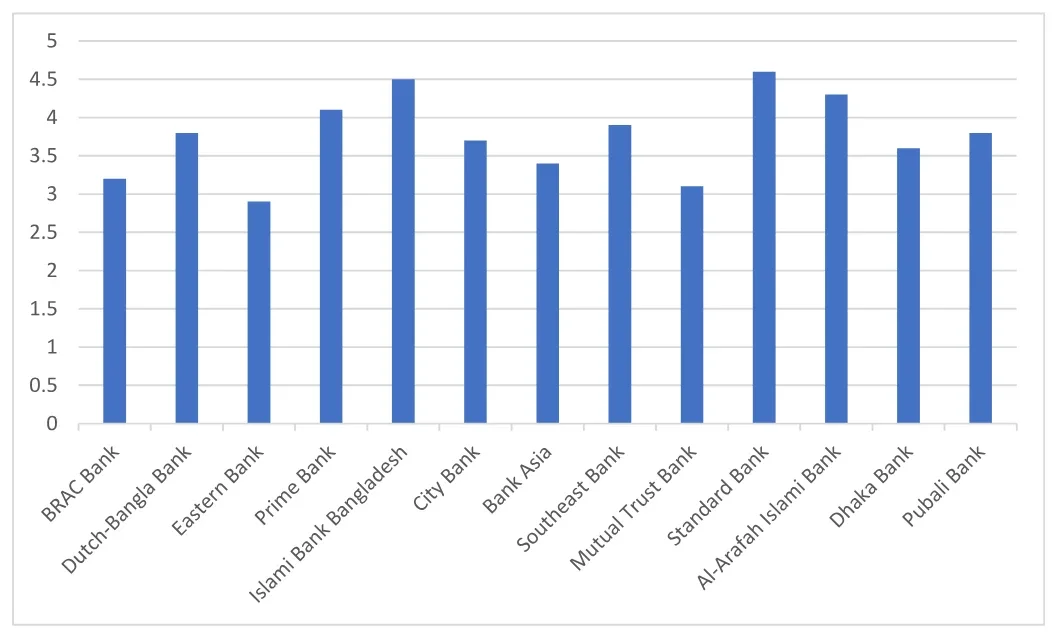
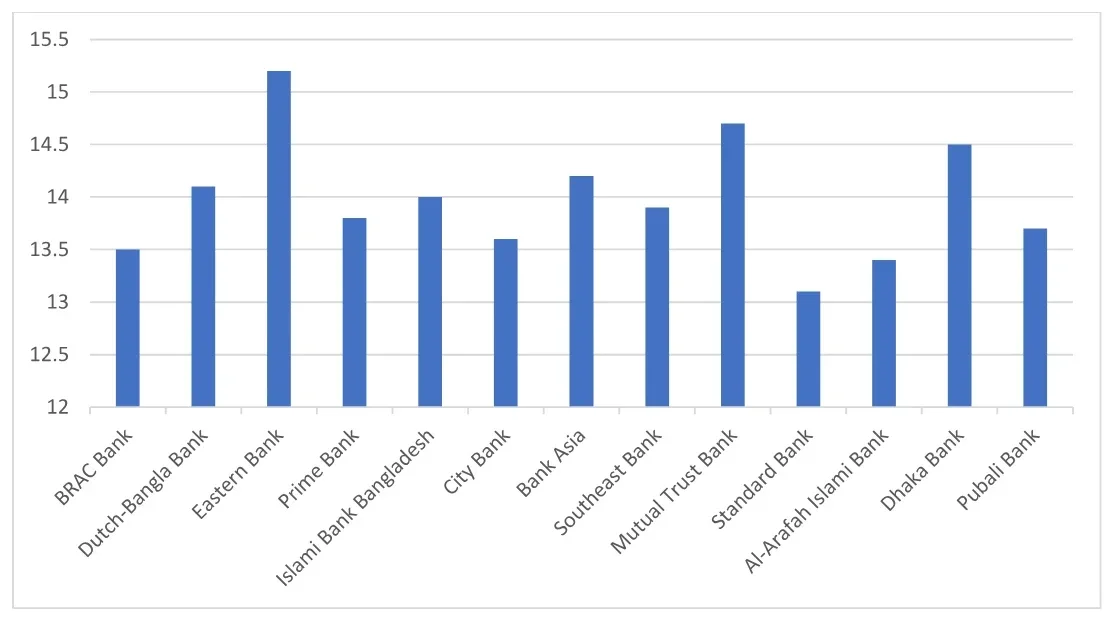
The figure shows that the NPL ratios in private commercial banks are much lower, which indicates the existence of better systems to monitor loans and, consequently, more efficient credit risk management practices.
This number demonstrates that Rupali Bank is the bank with the greatest capital adequacy ratio amongst the chosen state-owned commercial banks, whereas BASIC Bank is the one with the lowest capital adequacy ratio.
The figure shows that Eastern bank has the highest capital adequacy ratio compared to the chosen private commercial banks, next is Mutual Trust bank, then Dhaka bank.
5.3 CRM and Loan Portfolio Performance
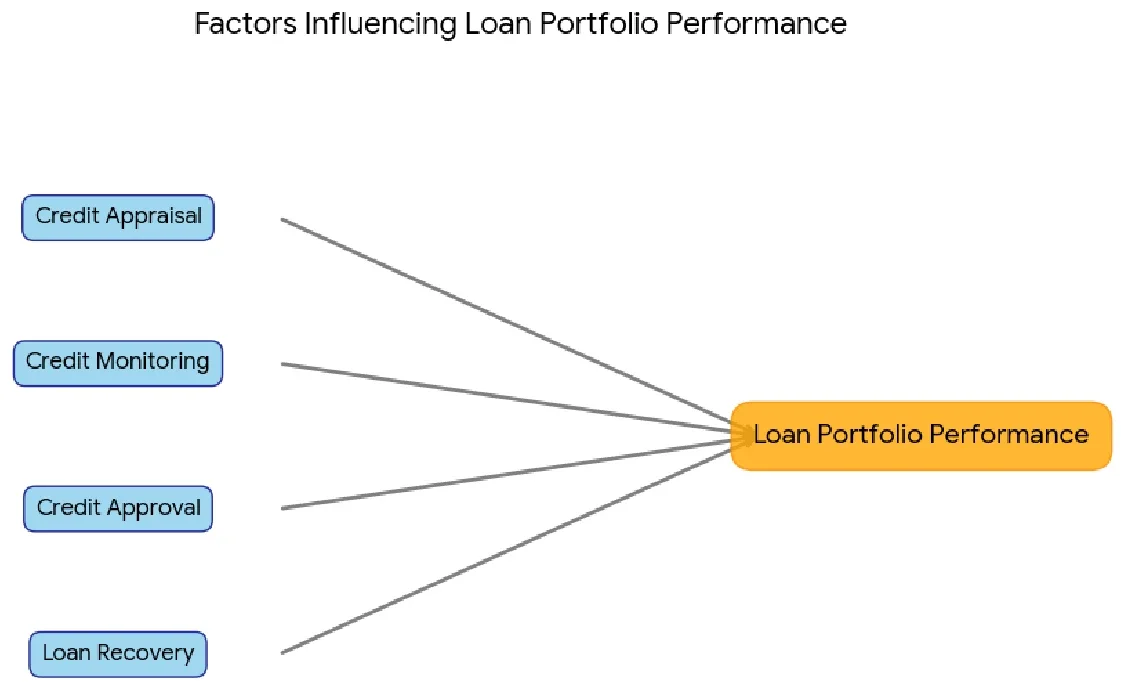
The practices of Credit Risk Management (CRM) form an important part in the enhancement of the performance of loan portfolio in both reducing the risk of default and upgrading the measures of credit monitoring. Best CRM involves borrower assessment, credit assessment, loan control, and management. Such practices assist the banks in ensuring that their loan portfolio is still good and that the ratio of non-performing loans is minimal.
Regression analysis was performed with the aim of establishing the relationship between CRM practices and loan portfolio performance. These findings suggest that the credit risk management is positively related to the loan portfolio performance and that associations between the credit monitoring and risk assessment mechanisms are stronger and related to the performance of loan repayment.
Table 12. Regression Output (CRM and Loan Portfolio Performance)
| Variable | Coefficient (β) | Std. Error | t-value | p-value |
|---|---|---|---|---|
| Constant | 0.512 | 0.103 | 4.97 | 0.000 |
| Credit Appraisal | 0.348 | 0.071 | 4.89 | 0.000 |
| Credit Monitoring | 0.296 | 0.068 | 4.35 | 0.000 |
| Credit Approval Process | 0.214 | 0.063 | 3.40 | 0.001 |
| Loan Recovery Management | 0.187 | 0.059 | 3.17 | 0.002 |
Model Summary
| Statistic | Value |
|---|---|
| R² | 0.62 |
| Adjusted R² | 0.59 |
| F-value | 41.28 |
| Significance (p) | 0.000 |
The regression outputs reveal that all the components of CRM have a positive impact on the performance of the loan portfolio. The credit appraisal is the most powerful and then credit monitoring. The model accounts about 62 percent in the variation in performance of the loan portfolios, which implies that CRM practices have a strong correlation with the quality of loan.
The structural equation model proves that CRM dimensions indeed are important in determining the performance of the loan portfolio. The most influential factors are credit appraisal and monitoring, and the significance of an effective borrower assessment and continuous monitoring of loan.
6. Recommendation and Conclusion.
6.1 Conclusion
The paper has analyzed the association between credit risk management (CRM), digital credit scoring, financial discipline and loan portfolio performance in commercial banks in the country of Bangladesh. The results of the analysis suggest that well-developed credit risk management practices will have a great effect on the quality of the loan portfolio and lessen the amount of non-performing loans. The banks that enforce good credit appraisal processes, periodic monitoring of loans, and effective loan recovery strategies have high chances of ensuring good performance of the loan.
The descriptive analysis has revealed that the majority of banking professionals regard borrower repayment capacity, credit history and collateral value as the most significant elements of credit risk evaluation. Other preventative approaches that were found to reduce credit risk included decent borrower screening, and incessant monitoring of loans. In addition, the regression analysis showed that the dimensions of credit risk management positively affect the performance of the loan portfolio significantly.
Comparative performance of loan and capital adequacy showed that on average, the non-performing loan ratio and the capital adequacy ratio of private commercial banks are low and high respectively than that of state-owned commercial banks. This shows that a stronger system of governance, a better system of risk management and more stringent lending policies lead to a more stable financial environment of the private banks.
In general, the research validates the fact that proper credit risk management practices are critical in ensuring the financial soundness of the banks and the enhancement of the performance of the banking industry in Bangladesh.
6.2 Recommendations
According to the study results, it is possible to make some recommendations to enhance the practice of credit risk management in commercial banks.
To begin with, banks would be advised to improve on their credit appraisal through adoption of cutting-edge digital credit scoring technology and risk evaluation techniques. Such technologies can be used to assist banks in determining the creditworthiness of the borrower more effectively and decrease the likelihood of loan default.
Second, the commercial banks ought to strengthen their monitoring of loans to identify early financial distresses among borrowers. Risk of defaulting on loan can be greatly prevented through regular monitoring and timely intervention.
Third, banks are advised to enhance their loan recovery methods, that is, embracing more effective legal and administrative means of recovering non-performing loans. The re-enforcement of the recovery structure can facilitate minimization of the proportion of bad loans on the banking sector.
Fourth, commercial banks that are owned by the state are to be integrated to have more robust governance practices and development of internal control measures to further improve their credit risk management practices. Enhanced transparency and accountability in lending decisions will be of use in minimizing political impacts and enhancing the quality of loans.
Lastly, the bank regulating bodies like the Bangladesh Bank should also control the way commercial banks manage credit risks and persuade them to use current risk management technologies to guarantee stability and sustainability of the banking system.
Reference
Akhter, N. (2023). Determinants of commercial bank’s non-performing loans in Bangladesh: An empirical evidence. Cogent Economics & Finance, 11(1), 2194128. https://doi.org/10.1080/23322039.2023.2194128
Alvi, J., Arif, I., & Nizam, K. (2024). Advancing financial resilience: A systematic review of default prediction models and future directions in credit risk management. Heliyon, 10(21), e39770. https://doi.org/10.1016/j.heliyon.2024.e39770
Amir, Md. K. B. A., & Choudhury, N. N. (2023). The impact of non-performing loans on bank lending behavior before and amid COVID-19 Pandemic: Evidence from selected private commercial banks in Bangladesh. International Journal of Research in Business and Social Science (2147- 4478), 12(3), 272–285. https://doi.org/10.20525/ijrbs.v12i3.2489
Barua, S. (2023). Credit Risk Management and Loan Portfolio Performance: Evidence from Selected Banks of Bangladesh. European Journal of Business and Management. https://doi.org/10.7176/EJBM/15-14-03
Dona, F. H. (n.d.). Developing a CIB-Based Credit Scoring Model for Retail Loan Risk Assessment: An Experimental Study on City Bank PLC.
Dunyoh, M., Ankamah, E. T., Japo, S., & Kosipa, K. (n.d.). The impact of credit risk on financial.
Kiarie, K. (n.d.). EFFECT OF DIGITAL CREDIT ON THE FINANCIAL PERFORMANCE OF COMMERCIAL BANKS IN KENYA. 4(1).
Kowsar, M. M., Mohiuddin, M., Master of Science in Management Information Systems, Lamar university, Texas, USA, Mohna, H. A., & MBA in Accounting, National University Bangladesh, Gazipur, Bangladesh. (2023a). CREDIT DECISION AUTOMATION IN COMMERCIAL BANKS: A REVIEW OF AI AND PREDICTIVE ANALYTICS IN LOAN ASSESSMENT. American Journal of Interdisciplinary Studies, 04(04), 01–26. https://doi.org/10.63125/1hh4q770
Kowsar, M. M., Mohiuddin, M., Master of Science in Management Information Systems, Lamar university, Texas, USA, Mohna, H. A., & MBA in Accounting, National University Bangladesh, Gazipur, Bangladesh. (2023b). CREDIT DECISION AUTOMATION IN COMMERCIAL BANKS: A REVIEW OF AI AND PREDICTIVE ANALYTICS IN LOAN ASSESSMENT. American Journal of Interdisciplinary Studies, 04(04), 01–26. https://doi.org/10.63125/1hh4q770
Kumar Sarker, B., Kumar Sarker, D., Rani Shaha, S., Saha, D., & Sarker, S. (2024). The Effect of Mobile Banking on the Financial Performance of Commercial Banks in Bangladesh. International Journal of Research and Scientific Innovation, XI(IX), 482–494. https://doi.org/10.51244/IJRSI.2024.1109045
Masrick Hasan, S., M. Anwarul Islam, K., Taleb Tawfiq, T., & Saha, P. (2025). Triple pillars of sustainable finance: The role of green finance, CSR, and digitalization on bank performance in Bangladesh. Banks and Bank Systems, 20(1), 38–50. https://doi.org/10.21511/bbs.20(1).2025.04
Min, O. (n.d.). YANGON UNIVERSITY OF ECONOMICS DEPARTMENT OF COMMERCE MASTER OF BANKING AND FINANCE PROGRAMME.
Sharif. (2024). The Impact of Credit Risk and Bank-Specific Variables on Financial Performance of the Listed Commercial Banks in Bangladesh. International Journal of Research and Innovation in Social Science.
Uddin, I. (2024). A STUDY OF FINANCIAL METRICS IN LEADING BANGLADESHI COMMERCIAL BANKS. International Journal of Business Management and Economic Review, 07(06), 55–69. https://doi.org/10.35409/IJBMER.2024.3626
Zhang, Y. (n.d.). An Exploration of the Dual Impacts of Artificial Intelligence Credit Scoring on Banking System Risk.
CITE THIS ARTICLE
Mamun, K. M. S. A. (2026). Digital Credit Scoring, Financial Discipline, and Loan Performance: Evidence from Commercial Banks in Bangladesh. Research Journal in Business and Economics, 4(1). https://www.researchbysalman.com/article/031ca939-87f6-42e9-b951-776d3438094c
K. M. S. A. Mamun, “Digital Credit Scoring, Financial Discipline, and Loan Performance: Evidence from Commercial Banks in Bangladesh,” Research Journal in Business and Economics, vol. 4, no. 1, 2026. [Online]. Available: https://www.researchbysalman.com/article/031ca939-87f6-42e9-b951-776d3438094c
Mamun, K. M. S. A. (2026) ‘Digital Credit Scoring, Financial Discipline, and Loan Performance: Evidence from Commercial Banks in Bangladesh’. Research Journal in Business and Economics, 4(1). Available at: https://www.researchbysalman.com/article/031ca939-87f6-42e9-b951-776d3438094c
Mamun, K. M. Salman Al. “Digital Credit Scoring, Financial Discipline, and Loan Performance: Evidence from Commercial Banks in Bangladesh.” Research Journal in Business and Economics, 4(1), 2026, https://www.researchbysalman.com/article/031ca939-87f6-42e9-b951-776d3438094c.
K. M. Salman Al Mamun. “Digital Credit Scoring, Financial Discipline, and Loan Performance: Evidence from Commercial Banks in Bangladesh.” Research Journal in Business and Economics, 4(1) (2026). https://www.researchbysalman.com/article/031ca939-87f6-42e9-b951-776d3438094c.
Mamun KMSA. Digital Credit Scoring, Financial Discipline, and Loan Performance: Evidence from Commercial Banks in Bangladesh. Research Journal in Business and Economics. 2026;4(1). https://www.researchbysalman.com/article/031ca939-87f6-42e9-b951-776d3438094c
@article{article_031ca93987f642e9b951776d3438094c,
  title = {Digital Credit Scoring, Financial Discipline, and Loan Performance: Evidence from Commercial Banks in Bangladesh},
  author = {K. M. Salman Al Mamun},
  year = {2026},
  journal = {Research Journal in Business and Economics},
  volume = {4},
  number = {1},
  url = {https://www.researchbysalman.com/article/031ca939-87f6-42e9-b951-776d3438094c},
}
TY - JOUR AU - K. M. Salman Al Mamun TI - Digital Credit Scoring, Financial Discipline, and Loan Performance: Evidence from Commercial Banks in Bangladesh PY - 2026 JO - Research Journal in Business and Economics VL - 4 IS - 1 UR - https://www.researchbysalman.com/article/031ca939-87f6-42e9-b951-776d3438094c ER -