Capital accessibility has been a key bottleneck to Small and Medium Enterprises (SMEs), especially in the emerging economies whereby the traditional banking systems tend to require a lot of collateral, complicated documents and take a lot of time to approve a business. The paper looks at the ways that micro-investment solutions based on FinTech can change the way SMEs are financed by offering alternative sources of funds beyond traditional banking institutions. The paper relies on the pertinent financial concepts and digital finance models to discuss how mobile payments, digital lending applications, and AI-based credit scoring help to decrease the information asymmetry and increase financial inclusion. It conducts a mixed-method research, which is a combination of quantitative analysis and qualitative information, to assess the association between FinTech accessibility, financial literacy, and SME performance. The results show that FinTech innovations have a positive effect on the access to capital, resilience in operations, and growth of business, especially among under-served entrepreneurs. Practices in emerging markets also indicate that the digital financial ecosystems are effective in addressing established gaps in financing SMEs. The report concludes that FinTech-based micro-investments are a structural change in the financing of SMEs, and recommends the need to have favorable regulatory environments, digital literacy, and financial ecosystems to promote sustainable and inclusive economic growth.
Research ArticleFinTech and SME FinanceAccepted
FinTech-Enabled Micro-Investments: Expanding Access to Capital Beyond Traditional Banking
Correspondence: salmanmamun65@gmail.com
Abstract
Keywords FinTechMicro-InvestmentsSME FinancingFinancial InclusionDigital Lending Platforms
1. Introduction
Small and Medium Enterprises (SMEs) play important roles in economic growth, creation of jobs, and innovation in the world but especially in the emerging markets (Chen, 2024; Jin & Liu, 2024; Omowole, Urefe, et al., 2024). They are the mainstay of the economies, the source of competition and the part of the vibrant economic environment (Agu et al., 2024). Although their contribution is very high, SMEs around the world have a very large financing gap and this is estimated to be $5.2 trillion a year with an estimate of 80 percent of the gap being experienced by firms in the emerging markets (Bruhn et al., 2017). This lack of continuous financing limits their growth opportunities and economic sustainability greatly (Omowole, Urefe, et al., 2024; Qasim et al., 2025)
This is worsened by the traditional banking models which place restrictions which further restrict access to capital by SMEs (Chen, 2024; Qasim et al., 2025). Traditional financial institutions tend to use strict credit assessment, collateral assurances and credit history, which most SMEs, particularly in low-income and emerging market economies are unable to satisfy (Chen, 2024; Qasim et al., 2025; Qin & Li, 2025). The combination of these legacy underwriting models and the requirement of a vast amount of documentation systematically isolates a large segment of viable small businesses, resulting into substantial credit rationing and the lock-out of a large portion of viable small businesses to formal financial services (Chen, 2024; Pohulak-Żołędowska & Wójcik-Czerniawska, 2025; Qin & Li, 2025).
Financial Technology (FinTech) has been a disruptive innovation in the financial industry that has transformed how capital can be accessed (Ebirim & Odonkor, 2024; Kok Wah, 2025). Using mobile, artificial intelligence (AI), and big data analytics, FinTech solutions make capital accessible to everyone, whether it is in terms of geographical geography, high transaction cost, or the insufficient banking infrastructure that has historically restricted financial access, especially in the emerging markets (Gupta, 2024; Kampani, 2024). Online lending, mobile payment systems, and alternative credit scoring systems, among other FinTech solutions, are enabling previously underserved users and including more people in financial systems (Adelaja et al., 2024; Dangkeng & Munir, 2025; Omowole, Mokogwu, et al., 2024).
The fact that FinTech-supported microfinance and digital transformational processes have the potential to improve the financial inclusion and economic resiliency of SMEs in emerging markets is critical (Del Sarto & Ozili, 2025; Obiki-Osafiele et al., 2024). The credit scoring AI algorithm that reviews alternative data rather than the standard financial records allows FinTech platforms to evaluate the creditworthiness of SMEs more effectively and precisely, which expands their access to financing (Omokhoa et al., 2024a; Soremekun et al., 2024). This technological change has resulted in the emergence of mass scalable, and low-cost micro-investment platforms, including peer-to-peer lending and crowdfunding, that bypass existing intermediaries and minimize frictions that have historically barred informal or thin-file borrowers (Qasim et al., 2025; Tanchangya et al., 2025). Consequently, FinTech creates sustainable finance, which promotes the development of SMEs and the general stability and development of emerging economies (Alvi et al., 2025; Ayeni, 2025; Sharma & Gupta, 2023).
2. Literature Review
The idea of expanding access to capital to Small and Medium Enterprises (SMEs) and Micro, Small, and Medium Enterprises (MSMEs) has been the focus of financial development research, especially with the advent of Financial Technology (FinTech). The academic community is paying growing attention to the idea that FinTech solutions transform the conventional financial intermediation by proposing alternative credit checks, digital financial services, and new financing methods. These innovations avail new opportunities to already underserved firms to get capital especially in the emerging markets where the traditional banking systems generally do not sufficiently satisfy the SME financing needs. The literature thus gives emphasis on theoretical underpinnings and practical FinTech processes which can help enhance financial inclusion and access to capital by SMEs.
2.1 Theoretical Foundations
The Conservation of Resources (COR) Theory offers an effective theoretical framework through which it is possible to consider how MSMEs use FinTech tools to obtain and preserve financial resources in uncertain conditions. According to the COR theory, organizations are vigorously trying to acquire, maintain and protect resources that become important to their existence and development. In the framework of financial inclusion, the MSMEs are also able to acquire the resources that are vital to them (in particular, credit, working capital, and financial transactions) that are often unavailable through conventional banking systems via the FinTech solutions (Obiki-Osafiele et al., 2024). Digital financial technologies, such as mobile based banking systems, digital payment systems and alternative credit assessment tools, enable MSMEs to enhance their financial stability and resilience in times of economic instability (Omowole, Urefe, et al., 2024). The tools are especially important in the emerging markets where formal financial infrastructure is either limited, expensive or inaccessible geographically (Del Sarto & Ozili, 2025; Mashoene et al., 2025). FinTech innovations help firms to manage the cash flow more efficiently and decrease the cost of its operation, which is why they are particularly relevant to the maintenance of the resources prescribed by the resource preservation principles embedded in the COR theory (Obiki-Osafiele et al., 2024).
The other theoretical approach that is widely utilized in the research of SME financing is the Pecking Order Theory which conventionally argues that firms opt to finance themselves through internal means followed by debt and then equity financing because of the information asymmetry and transaction costs. In the FinTech scenario, this theory can be applied to understand how young and innovative SMEs, which are structurally barred to turn to traditional bank financing, behave in terms of financing. Most SMEs do not have long operating records, collaterals or audited books of accounts and this presents more perceived risk to the traditional lenders (Agu et al., 2024; Chen, 2024; Qasim et al., 2025). Consequently, the conventional financial institutions usually include these firms under high-risk borrowers, restricting their entry into formal credit markets (Qin & Li, 2025). As a result, SMEs often resort to other sources of financing, like crowdfunding, online lending platforms, or micro-investments with the help of FinTech. These alternative mechanisms decrease information asymmetry by information-based assessment models and alternative more flexible financing structures (Qasim et al., 2025). In this sense, the FinTech platforms can be viewed as an intermediate innovation that alleviates the effects of financing limitations and widens access to capital among underserved businesses (Irawan et al., 2024; Omowole, Mokogwu, et al., 2024).
2.3 FinTech Micro-Investment Mechanisms
FinTech has provided a tremendous scope of digital services and financial systems that have minimized transaction costs, increased financial transparency, and democratized access to capital. These systems are critical towards filling financial gaps among individuals and companies that have always been locked out of formal financial systems (Irawan et al., 2024; Vishwakarma, 2025). FinTech platforms are used to support effective financial services which can be accessed even in areas where banking infrastructure is not well developed through the combination of mobile technologies, artificial intelligence, and data analytics (Adegbite, 2025; Adelaja et al., 2024).
Digital payment systems and mobile wallets are one of the greatest FinTech innovations that aid in the financial inclusion of SMEs. Through these systems convenient and low-cost digital methods of transacting, managing funds, and receiving payments are offered. M-Pesa, Paystack and GCash have all been successful platforms in increasing financial access in developing economies. These technologies will make financial transactions faster and more efficient by allowing entrepreneurs to make financial transactions with mobile devices, decreasing the use of the physical banking infrastructure (Ayeni, 2025; Dangkeng & Munir, 2025). Moreover, digital payments have transaction data, which can be utilized to measure financial behavior, which, in turn, can be used to support other credit scoring models and increase access to financing opportunities (Dangkeng & Munir, 2025).
The other significant technological advancement is the blockchain technology that improves security in transactions, transparency, and immutability in financial transactions. Financial systems that are based on blockchain permit decentralized records management and also minimize the use of traditional intermediaries. In the case of SMEs, the technology can greatly enhance activities like international payment, supply chain funding, and issuance of digital assets (Shanbhag, 2025; Tanchangya et al., 2025). Another thing that blockchain lowers is the risk of fraud and operational inefficiencies due to the availability of transparent transaction records. Within the microfinance system, blockchain technologies can increase the level of trust between lenders and borrowers by providing verifiable and traceable financial transactions (Omowole, Mokogwu, et al., 2024).
The alternative credit scoring systems are a critical development in the FinTech lending. The conventional credit scoring systems usually take into account a rich history of financial information which is not usually available to many SMEs and informal businesses. FinTech platforms overcome this drawback by using other data sources like the patterns of mobile phone use, the activity of social media, history of digital transactions, and utility payment history. FinTech businesses are also able to assess the creditworthiness of the borrowers more accurately and efficiently using advanced analytics, artificial intelligence, and machine learning algorithms (Irawan et al., 2024; Lomas & Reeta, 2024; Oyedokun et al., 2025). This strategy will allow lenders to evaluate risk with thin-file or no-file borrowers that would have otherwise not been accessible in the traditional credit markets (Adegbite, 2025; Adelaja et al., 2024). Predictive models based on AI contribute to the risk assessment process through the behavioral patterns and the personalization of the loan products to SMEs needs (Kok Wah, 2025; Omokhoa et al., 2024b).
2.4 Alternative Financing Models
The development of FinTech has also given rise to the innovative financing models that do not rely on classic banking. These models can increase access to capital by lowering the barriers to entry and using the digital platform to link borrowers and investors (Pohulak-Żołędowska & Wójcik-Czerniawska, 2025; Qasim et al., 2025).
A prominent model that has been spoken about is Peer-to-peer (P2P) lending, which essentially involves directly pitting individual investors with borrowers via electronic solutions. P2P lending websites also lower the administrative expenses by removing traditional financial intermediaries and also tend to offer more lenient loan terms than traditional bank funding (Qasim et al., 2025; Tanchangya et al., 2025). These platforms often have AI-based credit analysis tools to gauge the risk of the borrowers and have investors and lending opportunities matched. In the case of SMEs that find it difficult to obtain loans through conventional banks, P2P lending can be used as an effective and convenient option source of capital (Kok Wah, 2025).
Crowdfunding is also another important financing tool, and it enables SMEs and startups to attract finances raised by a large number of people via online tools. There are different types of crowdfunding models and some are reward-based crowdfunding and equity crowdfunding. Financial support is offered by the participant in reward-based crowdfunding in the form of non-financial rewards, including products or services, and in equity crowdfunding investors can receive ownership interests in a business (Qasim et al., 2025; Tanchangya et al., 2025). These models are especially helpful in case of the innovative startup that might have no financial track record demanded by other lenders but can be supported by the community and interest of the investors via digital platforms (Qasim et al., 2025).
Another alternative source model that has attracted eminence under FinTech innovation includes invoice financing. This model enables companies to sell outstanding invoices to third parties at a lower value so as to get access to instant cash. Invice financing has become digitalized in the FinTech platform, which has accelerated the verification, risk evaluation, and completion of the transaction. The method enables SMEs to be able to sustain cash flow and meet liquidity limitations arising due to late payments or long credit periods (Qasim et al., 2025). Invoice financing helps to enhance operational stability of small businesses by enhancing access to working capital, especially those that are in industries where the length of payment terms is very high (Obiki-Osafiele et al., 2024).
Together, these FinTech-based mechanisms and financing frameworks are beneficial in terms of enhancing financial inclusion on a wider scale because they enable a reduction in the use of the traditional banking infrastructure and increase access to capital by underserved SMEs. With the combination of digital technologies, data analytics, and decentralized financial infrastructures, FinTech platforms facilitate more inclusive financial ecosystems that facilitate the development of entrepreneurship and the economic sustainability of the economy (Ebirim & Odonkor, 2024; Jin & Liu, 2024). Consequently, FinTech is still transforming the worldwide financial system and providing the new avenues allowing the SMEs to obtain financing and maintain the economic growth over the long run (Adeniran et al., 2024; Shanbhag, 2025).
3. Methodology
3.1 Research Design
This study has a mixed-methods research design to effectively address the role of FinTech-enabled micro-investment platforms in broadening access to capital among Small and Medium Enterprises (SMEs). Mixed-method approach combines both quantitative and qualitative research to give further insights of complex financial and technological dynamics. The quantitative part is concerned with the measurement of the correlation between FinTech accessibility, financial literacy, and SME performance, whereas the qualitative part gives some contextual information about how FinTech platforms are applied by the owners of SMEs in practice.
The study is based on an explanatory sequential approach. During the initial step, the quantitative data is gathered and processed to determine the trends and connections among the most important variables in relation to FinTech adoption and SME financial performance. The second stage involves qualitative case-based knowledge to explain and complement the statistical results, which assists in clarifying how the tools of FinTech can have an impact on financing choices, accessibility of capital, and performance of businesses. The combination of the two design types makes this design statistically rigorous and contextualized, and this is necessary when analyzing financial innovation in emerging markets.
The theoretical aspect of the research presupposes that the availability of FinTech interfaces enhances the capacity of the SMEs to access other financial sources of capital. It is suggested that financial literacy is an intermediary variable that defines the effectiveness of SME owners in using FinTech solutions to enhance financial decision-making and business performance. The performance of the SMEs is measured by factors like the growth of the business, access to external finance, operational efficiency and financial sustainability.
3.2 Analytical Tools
In order to test the hypotheses about the relationships between the variables in the study empirically, Structural Equation Modeling (SEM) is used as the main tool of analysis. SEM is especially appropriate to examine a complicated cause-effect relationship in terms of latent variables like financial literacy, FinTech accessibility, and firm performance. The technique enables the estimation of two or more relationships at a time within one analytical framework, which will allow a perfect analysis of direct and indirect impacts.
The SEM analysis is done in two phases. One is that a measurement model is formulated to confirm the reliability and validity of the latent constructs employed in the research. At this stage, construct validity, factor loadings, composite reliability, and model fit are evaluated through the confirmation factor analysis. The second step involves estimating the relationship to support the hypothesized relationship between FinTech access, financial literacy, and SME performance. Particular focus is placed on the intermediating role of financial literacy that is measured in the framework of indirect effect analysis.
Besides SEM, the strategy of FinTech financing models is also assessed by the Analytic Network Process with Benefits-Opportunities-Costs-Risks (ANP-BOCR) framework. In contrast to the conventional decision-making models, ANP enables interdependent relationships between evaluation criteria, which is why it is appropriate to deal with complex financial ecosystems. The BOCR framework makes it possible to have a systematic evaluation of FinTech models in terms of their prospective benefits and opportunities as well as the costs and risks.
In this context, peer-to-peer lending, crowdfunding, digital payment systems, and other FinTech financing solutions are considered with regard to various criteria associated with financial accessibility, operational efficiency, the risk level, regulatory risk, and the technological preparedness. The judicious opinions of experts and the views of the stakeholders are included in order to create a weighted decision table, which determines the most efficient FinTech mechanisms to enhance the access to capital among SMEs.
3.3 Data Collection
To achieve a complete and credible empirical examination, the study uses both primary and secondary sources of data. Primary data will be gained using structured questionnaires which will be given to owners and managers of SME. The survey tool will help to retrieve data associated with the usage of FinTech, the level of financial literacy, financing difficulties and the perceived effects of FinTech on the work of the business.
The questionnaire has several parts that address the demographic features of companies, financial management approach, the availability of formal and informal sources of financing, the implementation of digital financial tools, and the financial performance. Response measurement is done in Likert-scale items so as to be able to conduct quantitative analysis. The target group will include SMEs in different industries such as manufacturing, services, retail, technological-based companies. The stratified sampling technique is used so that the firms in various industries and business sizes can be represented.
In order to complement the survey results, the qualitative data will be collected using case-based observations of SMEs that have actively used FinTech schemes to finance and manage their finances. Such aspects of the case offer a contextual insight into the application of FinTech tools in the actual business setting, emphasizing operational benefits, barriers to adoption, and strategic performance.
International financial and economic databases are used in order to gather secondary data that will help in the analysis and give more information to the context. These datasets present macro level indicators based on financial inclusion, adoption of digital financial services and patterns of financing SME. The validation of the survey results and the contextualization of the study in larger trends of financial development are performed with the help of the secondary data.
The data which is collected is subjected to a stringent preprocessing before it is analyzed which involves data cleaning, treatment of missing values, and evaluation of reliability. Descriptive statistics are produced in the form of summarizing the important features of the sample population. Survey data, case-based insights, and secondary data will be used jointly, which will guarantee the methodological triangulation, enhancing the validity and strength of the research results.
The proposed study will adopt the integrated methodology approach to provide empirical evidence of how FinTech-enabled micro-investment mechanisms help to widen the capital access and enhance financial inclusion of SMEs.
4. Impact of FinTech on Access to Capital
The fast growth of Financial Technology (FinTech) has deeply transformed the global financial ecosystem, specifically in enhancing access to capital by Small and Medium Enterprises (SMEs). The banks in traditional settings have been known to depend on collateral-based lending, strict documentation demands as well as centralized financial systems that restrict access to underserved groups. Alternative financing mechanisms created as a result of FinTech innovations use mobile technologies, digital platforms, and data-driven credit assessment models to minimize those barriers. Consequently, FinTech has emerged as an imperative factor in financial inclusion and financial resilience, particularly in the emerging economies where formal banking services are not available to everyone.
4.1 Improving Financial Inclusion
Among the greatest contributions of FinTech, one should highlight the fact that it contributes to the increment of financial inclusion because it offers financial services to people and corporations that were previously not covered by conventional banking. Mobile wallets, online investment marketplaces, and digital lending platforms can help entrepreneurs to get financial services without using the physical bank branches or the huge amount of documentation.
The MfSs have been found to be most useful in rural and underserved areas where the traditional banking service facilities are few. Through the use of mobile phone infiltration, FinTech platforms enable consumers to conduct transactions, store money, and get credit using the services of minimal digital applications. Such changes in technology decrease transaction costs, enhance the financial accessibility of business operations, and allow small businesses to engage in formal economic activity more actively (Demirgüç-Kunt et al., 2022).
FinTech-based financial services have particularly been beneficial to women entrepreneurs and rural microenterprises. Online financial services give renewed access to credit, enabling the entrepreneur to operate the business in a manner that allows them to use the cash to invest in their business, to finance the business, and grow the businesses without having to use the under-the-table lending system. Moreover, FinTech services often employ alternative credit scoring methods, which predict the behavior and transactional data instead of using only the conventional financial statements. The strategy contributes considerably to the credit accessibility of people who have a limited formal financial background (Arner et al., 2015).
Besides that, digital lending platforms are characterized by simplified application and approval of loans as automated algorithms and real-time data analysis are used. This also shortens the processing time and enables SMEs to be financed at a far much faster rate than with the conventional banking avenues. The outcome is the creation of a more inclusive financial system to include previously marginalized populations and encourage their increased economic participation.
4.2 Empowering Economic Resilience
In addition to financial inclusion, FinTech has also shown the ability to enhance economic resilience especially in the times of economic disruption. The COVID-19 epidemic revealed the weakness of SMEs, which are more dependent on the physical operations of traditional financial institutions and physical transactions. Based on lockdowns and restrictions to movement, most SMEs found it challenging to remain in the liquidity status and continue operation.
The digital financing platforms were very important in sustaining the SMEs in this crisis. FinTech solutions helped businesses to remain connected to financial services remotely, provided digital payments, online lending, and electronic transactions. Through digital financial systems, SMEs could continue running their businesses, handle supply chains, and maintain customer contact (OECD, 2025). Another example of digital lending that was thoroughly flexible in the pandemic was quickly issuing microloans and working capital financing to small businesses that suddenly lacked liquidity. The FinTech companies were able to assess loan applications efficiently and allocate funds faster than the traditional financial institutions through automated risk assessment models.
In addition, the flexibility of the business was facilitated by FinTech, which combined financial management systems, payment gateways, and digital marketplaces. These bundled financial platforms enabled the SMEs to spread their revenue and move to digital business frameworks, thus enhancing their ability to survive unpredictable economic conditions (Rasheed et al., 2019; Saal et al., 2017).
Table 1. Key FinTech Tools Supporting SME Financial Inclusion
| FinTech Tool | Primary Function | Impact on SMEs |
|---|---|---|
| Mobile Wallets | Digital transactions and payments | Reduced transaction costs and improved financial access |
| Digital Lending Platforms | Online credit provision | Faster loan approval and broader access to financing |
| Alternative Credit Scoring | Data-driven credit assessment | Inclusion of thin-file and unbanked borrowers |
| Blockchain Platforms | Secure financial transactions | Improved transparency and reduced fraud risk |
Table 1 shows that various FinTech instruments play a role in enhancing financial inclusion. Mobile wallets and digital lending platforms are the main factors that increase the access to financial services, whereas alternative credit scoring and blockchain technologies are employed to make the financial transactions more reliable and transparent. Taken together, these innovations can help SMEs to address structural constraints linked to conventional financial systems.
4.3 Case Studies of FinTech Applications in Emerging Markets
The practical use of FinTechs in emerging economies shows that digital financial innovations have the power to alter the landscape of SME financing. A number of significant resources underscore the usefulness of FinTech solutions in increasing access to capital.
4.4 M-Pesa (Kenya): Mobile-Based Financial Inclusion Model
M-Pesa, the innovation that was developed in Kenya in 2007, is one of the most successful mobile financial service platforms in the world. M-Pesa, created by Safaricom, allows one to deposit, withdraw, transfer money, and even pay money and services using mobile phones without necessarily having a conventional bank account. The platform has massively increased financial inclusion in Kenya especially in rural communities where the banking system is not well established (Suri & Jack, 2016).
The studies have shown that M-Pesa has also enhanced the household financial resilience significantly and contributed to the growth of small businesses by enabling efficient and secure financial transfer. The entrepreneurs will be able to receive digital payments, better manage cash flow, and a microcredit service will be available in the platform. The recent estimations suggest that over 90 percent of Kenyan households subscribe to mobile money services, which proves the tremendous effect of financial inclusion through digital means on economic inclusion.
4.5 KoinWorks (Indonesia): Peer-to-Peer Lending Platform
KoinWorks is an Indonesian peer-to-peer (P2P) lending company that provides an online marketplace to match SMEs against individual and institutional investors. During lending, KoinWorks has been designed to provide funding to small businesses without the collateral conditions that the conventional banks employ to fund such businesses.
The site provides various financing alternatives such as working capital and invoice financing, and expansion finance. SMEs also enjoy quick services in loan applications and financing. To investors, KoinWorks offers them a chance to invest in minor investment projects in the emerging market economies.
Research indicates that peer-to-peer lending markets such as KoinWorks have been significant in mitigating financing gaps of SMEs in Southeast Asia by making more capital and reducing the cost of borrowing (Claessens et al., 2018).
4.6 Tala / Paylater (Nigeria): Digital Microloan Platforms
Online micro lending applications like Tala and Paylater (now Carbon) have increased availability of short term credit to individuals and small businesses in a number of African countries, including Nigeria. These platforms can use mobile data, behavioral analytics, and artificial intelligence to assess the creditworthiness of the borrowers in real-time.
In contrast to the classical lenders who are forced to depend on formal financial history, these platforms determine credit risk based on alternative datasets like smartphone usage behavior, payment history and transaction behavior. This model enables the entrepreneurship with no formal credit histories to access the microloans promptly via the mobile applications.
These online lending systems save a lot of time in the processing of loans, which means that the SMEs will get access to working capital within hours as opposed to weeks. Because of this, digital microfinance has emerged as a core instrument to entrenching entrepreneurship and small business growth in emerging economies (Frost et al., 2019).
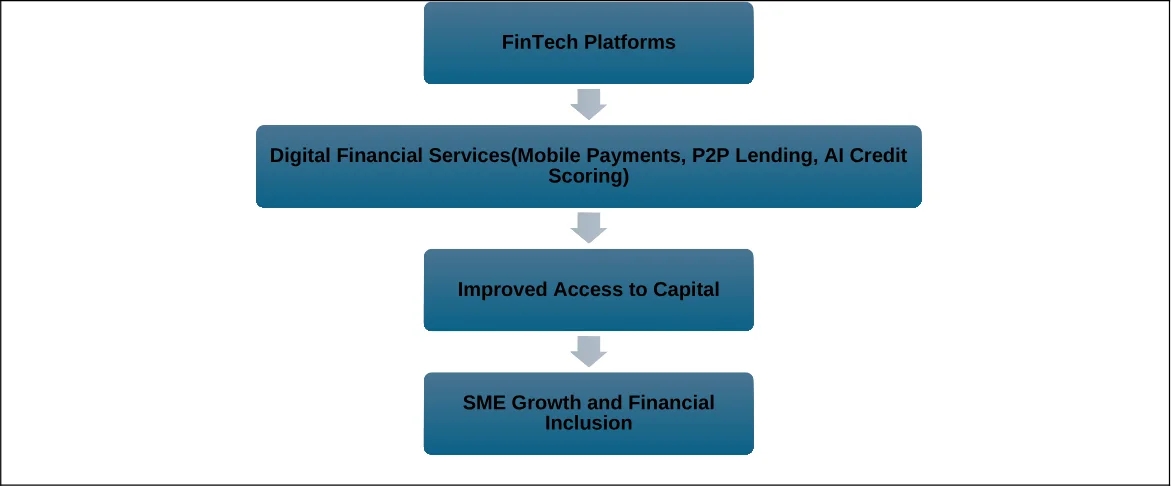
Figure 1 shows, the process by which FinTech platforms impact SME development works in the following way. Financial technologies facilitate access to financial services, which access to capital by SMEs. Higher monetary availability creates opportunities to grow a business, stabilise operations and be more involved in formal economies.
4.7 Overall Implications
The incorporation of FinTech in the systems of SME financing has promoted access to finance among the emerging markets to a considerable extent. Using digital technologies, FinTech platforms eliminate what has traditionally been seen as barriers to geographic distance, collateral requirements, and information asymmetry. As the case studies above show, the FinTech innovations do not only increase the financial inclusion but also the economic resilience and entrepreneurial development. With further advancement of digital financial technologies, it is anticipated that these technologies would serve a more significant purpose in determining inclusive financial systems and promoting sustainable economic growth of SMEs across the different parts of the globe.
5. The Complementarity of FinTech and Traditional Banks
The fast development of Financial Technology (FinTech) has been discussed as a threat to the hegemony of conventional banking organizations. Nevertheless, an emerging literature points at the idea that FinTech cannot be considered as a substitute to conventional financial organizations but rather as a complementary system that promotes the efficiency, access, and novelty of the financial environment. Rather than competing in a vacuum, the partnership of FinTech companies with conventional banks generates new financial frameworks, which are both technologically innovative and institutionally stable. This symbiotic relation has a pivotal effect on the increase in access to capital by Small and Medium Enterprises (SMEs) and especially in the emerging economies where the financial infrastructure still does not have an even distribution.
5.1 The Hybrid Model
The hybrid model is defined as joint collaborations between conventional banks and FinTech companies that combine digital innovation with preexisting financial systems. The traditional banks have a long history of experience in regulatory frameworks, capital resources, and risk management, whereas the FinTech companies bring in technology-based services, responsive platforms, and data-driven financial solutions. The hybrid financial model (seen as a combination of these strengths) will greatly enhance the delivery of financial services and access to capital (Arner et al., 2015).
Among the benefits of the hybrid model, there is the fact that it overcomes structural inefficiencies in the traditional banking systems. Technologies like artificial intelligence, machine learning and big data analytics are used by FinTech companies to simplify credit screening and automate finance. Banks in their turn offer financial credibility, compliance with regulations and access to huge funds. In this manner, banks are able to use FinTech innovations to lower the cost of operations and increase the offer of digital services, and FinTech companies are able to gain the advantages of the financial stability and trust linked with established banking institutions (Claessens et al., 2018).
In the case of the SMEs, the hybrid model gets on the way of capitalizing credit. Conventional lending systems have been associated with long approval systems and hard collateral conditions. Digital lending solutions enabled by FinTech when connected to bank infrastructures enable more rapid credit evaluation and more liberal lending decisions. The model enhances access to loans by small businesses that could not access loans because of lack of documentation or financial history as could be seen in conventional banks.
Moreover, the hybrid partnerships help in the creation of inclusive financial services that specifically target underserved groups. Onboarding systems on the digital platform, mobile-based credit solutions, and other forms of credit scoring can help financial institutions access rural entrepreneurs, women-owned businesses, and informal businesses that are not served by the traditional banking system (Demirgüç-Kunt et al., 2022).
5.2 Ecosystem Integration
Despite the partnerships on an individual basis, the larger assimilation of FinTech startups into the conventional financial ecosystem is vital to sustainable financial innovation. There are several stakeholders in financial ecosystems such as banks, FinTech startups, and regulators as well as investors and technology providers. Good cooperation among these actors facilitates the creation of a balanced financial environment encouraging innovation and also financial stability can be ensured.
Banks that are traditional are usually under tight regulatory measures meant to check the stability of the financial systems. As much as these structures offer the required protection they can also stifle innovations and reduce the rate of adopting new technologies. FinTech startups, in their turn, are more technologically nimble and capable of creating digital financial services at remarkable speed. The integration of these two sectors makes them complementary to each other through the integration of regulatory compliance and technological experimentation (Gomber et al., 2017).
This integration is also enabled by regulatory technology (RegTech) and open banking programs. Open banking models can facilitate the safe exchange of data between the banks and Financial Technology firms using application programming interfaces (APIs). This will enable FinTech companies to create innovative financial products without violating consumer protection and regulation with the use of banking data. These partnerships contribute to the evolution of digital credit services, robotic financial advice, and value chain payments (Frost et al., 2019).
In the case of SMEs, integration of ecosystem enhances access of financing channels and financial services. There is an increased availability of different financing facilities to SMEs in digital loans, crowdfunding sites, and integrated banking in single financial platforms. This interconnected financial system enhances the financial strength and it minimizes the reliance on one source of funding.
Table 2. Comparison of Traditional Banking, FinTech, and Hybrid Financial Models
| Financial Model | Key Characteristics | Limitations | Benefits for SMEs |
|---|---|---|---|
| Traditional Banking | Collateral-based lending, regulatory stability, centralized financial services | Slow loan processing, strict documentation requirements | Large funding capacity but limited accessibility |
| FinTech Platforms | Digital lending, alternative credit scoring, mobile financial services | Limited regulatory experience and capital reserves | Faster access to financing and inclusive credit assessment |
| Hybrid Model | Collaboration between banks and FinTech firms | Requires regulatory coordination and technological integration | Combines financial stability with digital innovation |
Table 2 shows the comparative strength of various financial models. Although conventional banks offer stability of funds and capital, FinTech services offer technological advancement and quicker provision of financial services. All these strengths are incorporated into the hybrid model, which allows the financial institutions offer efficient and inclusive financing to SMEs.
Figure 2 shows the financial ecosystem that links regulators, traditional banks and FinTech companies. These stakeholders are combined through digital infrastructure and tech integration to support the SME financing and financial inclusion. This ecosystem encourages innovation without any regulatory controls and financial stability.
5.3 Implications for SME Financing
The complementary nature of FinTech and traditional banks carries significant consequences on SME financing. Hybrid financial ecosystems also help decrease the financing gap encountered by small business by offering various entry points into capital. FinTech services enable SMEs to enjoy the convenience and time-saving aspect of banking services but retain the trust and credibility linked to the activity of the traditional banking organizations.
Additionally, joint financial models promote financial innovation that is not against the regulations. The institutional partnerships allow banks to access some of the most advanced technological opportunities, whereas FinTech companies get a sense of legitimacy and scalability. This interdependence makes the financial system around the world to be resilient and inclusive.
With further changes brought on by digital financial technologies, it is probable that integrating FinTech into the current banking systems will gain greater significance in terms of financial inclusiveness and sustainable SME growth.
6. Challenges, Risks, and Limitations
Although Financial Technology (FinTech) has a potential of transforming access to capital by Small and Medium Enterprises (SMEs), a number of structural limitations, operational risks and systemic limitations exist. Although FinTech platforms have led to the enhancement of financial inclusion and also showcased alternative financing systems, the high rate of growth also poses some issues, which are associated with cybersecurity vulnerability, digital inequality, and financial sustainability. The challenge of dealing with these issues is therefore important in ensuring that FinTech solutions can be used to create an inclusive and stable financial ecosystem instead of creating other types of financial exclusion.
6.1 Security Threats
Among the most important issues related to the FinTech platforms, cybersecurity threat and data privacy issues become increasingly risky. The utilization of digital infrastructures, cloud computing, and massive systems of data processing makes FinTech services prone to cyberattacks, identity theft, and other digital frauds. With the growing number of financial transactions going online, the amount of sensitive financial and personal information that FinTech companies deal with has grown significantly, exposing it to security vulnerabilities (Arner et al., 2015; Javaheri et al., 2024).
There are various types of cybersecurity threats such as phishing, malware critical, unauthorized access to the system, and malicious online dealings. These are of greatest concern to SMEs and small-scale entrepreneurs who might not have organisational technical expertise or cybersecurity equipment to safeguard their online financial resources. An effective cyber attack may lead to loss of money, reputation and lack of trust in online financial systems (Javaheri et al., 2024).
Serious challenges are also related to data privacy concerns. FinTech companies tend to gather and process a large amount of behavioral and transactional data to facilitate other credit scoring systems and financial risk analysis. Although such data-driven solutions enhance the accessibility of financial functions, it has also cast doubt on the way personal and financial data are stored, distributed, and used. Such risks are also increased by weak regulatory frameworks and uneven standards of data protection in most emerging economies (Gomber et al., 2017; Wang et al., 2024).
The way to counter such challenges is with more rigorous regulatory control, better cybersecurity systems, and effective data protection policies. The use of encryption systems, protective authentication systems, and regulatory compliance guidelines can enhance the security of platforms and boost consumer confidence in FinTech systems (Nwafor & Ayodele, 2024).
6.2 The Digital Divide
The other significant constraint impacting the use of FinTech is that a digital divide is prevalent in many parts of the world, especially in developing and emerging markets. FinTech services are highly dependent on internet connectivity, smart phone connectivity, and internet literacy. Nevertheless, there are still considerable differences in the digital infrastructures and technological capacities between the rural and underserved populations.
In most of the developing countries, poor access to broadband connectivity, poor power supply, and insufficient telecommunication infrastructure limit access to digital financial services. Consequently, some SMEs are not able to make full use of the innovations of FinTech in rural regions because of the technological barriers (Demirgüç-Kunt et al., 2022; Tay et al., 2022).
Poor digital literacy is also a barrier to the uptake of FinTech. Lots of small entrepreneurs and business owners do not have enough knowledge to successfully navigate online financial platforms, handle online transactions, or analyze online credit products. Lack of financial and technological literacy might make users struggle with the loan terms and conditions, repayment systems, and the functionality of the platform (Sumartini et al., 2024).
There is also gender inequality which contributes to the digital divide. In developing economies, women entrepreneurs tend to have little access to digital technologies and financial services because of socio-economic factors. These institutional disparities diminish the capacity of FinTech systems to become more inclusive and give rise to the necessity to introduce specific digital literacy courses and infrastructural investments (Alom et al., 2025; OECD, 2025).
The solution to this digital divide then involves concerted initiatives that should be undertaken by governments, financial institutions, technology providers and development agencies. Funding in digital infrastructure, mobile connectivity, and digital education initiatives are also necessary so that FinTech solutions are able to meet marginalized groups of people and help them become more financially included.
6.3 Sustainability Concerns
Although FinTech innovation has greatly increased access to capital, there are questions about the sustainability of digital financing schemes over the long run. The possibility of over-indebtedness of SME borrowers is one key challenge. Digital lending solutions can tend to take very fast loans and have very light documentation standards, which can promote over-borrowing without sufficient risk evaluation. When SMEs are in a bad financial position, they might end up in a situation of accumulating several short term loans in various platforms and hence ending up in the unsustainable levels of debt.
Studies have shown that online lending services can be irresponsible in their lending behavior, targeting speed of market growth. Here, a lack of credit assessment measures can expand credit risks and financial instability among borrowers (Claessens et al., 2018). The culture of aggressive digital lending would only add to the financial vulnerability of small businesses without the appropriate regulatory protection since the practice can strengthen sustainable growth (Novi Prihatini, 2023).
The other sustainability issue is connected with transaction charges and unseen expenses of particular FinTech services. Although digital platforms are usually promoted to be cheaper to operate than traditional banking, there are other services that charge high interest rates, service fees, or transaction costs that may unproportionately impact small businesses facing limited financial means (Xu et al., 2025).
Besides, the fast growth of FinTech markets has presented regulatory issues. Most of the emerging economies do not have elaborate regulatory infrastructures that can effectively oversee the digital financial services. The lack of regulation can enable unregulated, or poorly regulated, FinTech participants to enter the market, which can contribute to the growth of financial malpractices, consumer exploitation, and market instability (Frost et al., 2019; Vijayagopal et al., 2024).
To secure the sustainability of FinTech-based financial ecosystems, a moderated regulatory approach is thus needed. In order to encourage innovation, policymakers should encourage the establishment of clear standards of regulation of digital lending practices, consumer protection, and financial transparency. Systemic risks can be avoided through continuing to use responsible lending frameworks, regulatory sandboxes, and digital financial literacy programs and still enjoy the inclusive benefits of FinTech solutions.
Table 3. Table 3 Key Challenges and Risks Associated with FinTech-Based SME Financing
| Challenge Category | Key Issues | Potential Impacts |
|---|---|---|
| Cybersecurity Risks | Data breaches, digital fraud, hacking | Loss of financial assets and reduced user trust |
| Data Privacy Concerns | Misuse of personal and financial data | Regulatory challenges and privacy violations |
| Digital Divide | Limited internet access, low digital literacy | Unequal access to FinTech services |
| Over-Indebtedness | Easy access to multiple digital loans | Financial instability for SMEs |
| Regulatory Gaps | Weak financial supervision frameworks | Market instability and consumer exploitation |
Table 3 presents key risks related to the adoption of FinTech in SME financing. The issues of data privacy and cybersecurity threats, in turn, have the major impact on platform security and consumer confidence. In the meantime, the barriers to inclusivity of FinTech services are structural, including the digital gap and regulatory inconsistencies. These concerns must be solved in order to make sure that FinTech platforms contribute to the fair and sustainable financial growth.
7. Policy Recommendations and Future Trends
Financial Technology (FinTech) growth has presented a huge potential of enhancing access to capital by Small and Medium Enterprises (SMEs) especially in emerging economies where conventional financial institutions are usually unable to fund small enterprises. Nevertheless, positive and sustainable policy frameworks, institutional capacity development, and consistent technological innovation are essential to the ability of financial inclusion by FinTech. There is need to ensure that the policymakers, financial institutions and technology providers collaborate to create regulatory environments that would promote innovation and also provide financial stability, consumer protection, and economic resilience in the long term.
7.1 Regulatory Frameworks
The presence of an effective regulatory environment is crucial to encourage responsible FinTech innovation and ensure that financial systems are not under threat because of possible risks. The field of FinTech is highly dynamic in a technical environment, and new financial services and products are being launched in the market constantly. Conventional regulatory systems, which were initially created to deal with conventional banking institutions, find themselves in most instances unable to keep up with these technological advances. Consequently, policymakers are forced to assume adaptive and flexible regulatory strategies that foster innovation and at the same time uphold regulation and accountability.
The introduction of regulatory sandboxes is one of the policy tools that can be used to establish this balance. Regulatory sandboxes enable FinTech companies to experiment with new financial products and services in a managed setting with financial regulators overseeing them. This strategy will allow regulators to monitor new technologies in action, assess the risks that they may pose, and come up with relevant regulatory response without necessarily imposing compliance mandates. In the case of FinTech startups, sandboxes offer a well-organized way of innovation, maintaining the consumer protection principles.
Besides regulatory sandboxes, governments ought to come up with effective and uniform regulatory standards relating to digital financial services such as digital lending platforms, peer-to-peer investment networks, and mobile financial services. Some of the areas that these guidelines should touch upon include data protection, standards of cybersecurity, financial transparency, and responsible lending practices. Such a balanced approach to regulation would help to ensure that FinTech firms are able to become innovative and still provide trust and stability to the rest of the financial ecosystem.
The intersectoral cooperation between regulators, conventional financial institutions, and FinTech companies is also important towards developing effective regulatory frameworks. The knowledge sharing, better development of regulatory capacity, and the introduction of financial technologies, which correspond to the objectives of the national economic development, can be promoted by the help of public-private partnerships. Policymakers can encourage FinTech innovation by enhancing cooperative regulatory conditions, which will reduce systemic risks of digital financial services.
7.2 Capacity Building
Although, technological innovation is in the front line to increase financial access, the capabilities and knowledge of users are also significant in achieving the successful adoption of FinTech services. Low levels of financial literacy and lack of digital skills are a major barrier to many SMEs especially in the developing and emerging economies. In the absence of sufficient knowledge of digital financial tools, entrepreneurs will be unable to fully exploit FinTech platforms or they will become more susceptible to financial risks. There is a need to therefore build capacity so that SMEs and their owners will be able to interact with FinTech systems appropriately. Governments, financial institutions and other development agencies are expected to invest in specific financial literacy initiatives that will inform business people on digital finance, risk management, credit screening and responsible borrowing behavior. These programs can assist owners of SME to make sound finance choices, handle digital financial accounts and assess the appropriateness of a number of financing alternatives.
Training in digital skills is as well. SMEs are also to be empowered with the technological skills to navigate through digital platforms, transact online, and incorporate the use of FinTech in business. Workshops, on-line learning systems, and mentorship programs are training programs aimed at enhancing the level of digital literacy among the entrepreneurs and small business managers. The marginalized groups such as rural entrepreneurs, women-owned businesses and informal sector participants should also be given special consideration since they are usually disadvantaged by structural factors in accessing financial services. Specific capacity-building initiatives that target these populations will go a long way in boosting the financial inclusivity outcomes and will ensure that the fruits of FinTech innovation will be shared more evenly among various sectors of the economy.
Educational structures and vocational training options are also significant towards creating a long term digital and financial skills in the labor force. By introducing financial technology education as part of academic programs, it is possible to educate future entrepreneurs and professionals to work within more and more digital financial ecosystems.
7.3 Emerging Trends
Moving forward, multiple technological trends should change the situation in the FinTech and increase the availability of capital to SMEs. The use of artificial intelligence (AI) in financial services is one of the most important developments. The AI-driven financial platforms can process huge amounts of financial and behavioral data to produce individualized financial products that serve the particular needs of a specific business. Such systems may offer personalized loan advice, artificial intelligence-based financial planning, and predictive analytics that will facilitate financial decision-making.
Risk assessment capabilities are also improved by using AI-based financial technologies since traditional credit scoring models might not consider financial behavior pattern. This will enable financial institutions to better assess the credit worthiness of the SMEs and increase the financing opportunities of short-financed businesses. With the further development of AI technologies, they will most likely become a more centerpiece of automated financial services, digital lending platforms, and intelligent investment systems. The other trend is the emergence of decentralized finance (DeFi), a financial system based on blockchain technology that provides decentralized financial systems without the involvement of traditional financial intermediaries. DeFi platforms allow their users to borrow and lend money as well as invest in blockchain-based networks. These systems will provide more transparency, lower transaction costs and more financial accessibility through the elimination of the numerous barriers presented by centralized financial institutions.
Even though the DeFi is still in its infancy, the potential of the system to finance SMEs is immense. Lending platforms that are decentralized, can also offer new opportunities to small businesses to tap into the global capital markets without necessarily being required to use the traditional banking systems which tend to have restrictive lending policies. Nevertheless, the rise of DeFi also brings regulatory and security risks that have to be adequately tackled in order to achieve stability in the system and consumer protection.
Another trend, which will define the future of FinTech, becomes the incorporation of Environmental, Social, and Governance (ESG) indicators into online financial services. With the growing interest of the world on sustainable development and responsible business conducts, financial institutions are starting to integrate the idea of ESG into lending and investment choices. Advanced data analytics can be applied to assess the environmental and social impact of any business using FinTech platforms, which will allow investors to invest in the business that can meet the sustainability goals.
Micro-lending platforms that incorporate ESG indicators may include incentives that help to encourage SMEs to become more environmentally friendly, enhance their governance frameworks, and contribute to the common social development objective. Making financial accessibility connected with the sustainability performance, FinTech systems will be able to foster responsible economic growth and facilitate inclusive financial development.
Altogether, further development of FinTech will be probably associated with the more profound combination of advanced technologies, sustainable finance values, and an inclusive financial policy. The policymakers, financial institutions, and technology providers should still be able to cooperate to create financial ecosystems that can take advantage of technological innovation and allow equitable access to capital and long-term economic security.
8. Conclusion
8.1 Synthesis of Transformation
This study explored how FinTech-enabled micro-investment platforms can transform access to capital by Small and Medium Enterprises (SMEs) and serve especially underserved and emerging markets. The results indicate that FinTech innovations are transforming the conventional financial systems by bringing digital financial services, alternative credit assessment frameworks, and decentralized investment systems that eliminate the barriers that have historically been involved with the traditional banking systems. The FinTech solutions can give more viable and quicker financing opportunities to SMEs by relying on the technologies of mobile financial services, artificial intelligence, digital lending platforms, and peer-to-peer investment networks.
The discussion has shown that, micro-investments, which are facilitated by FinTech, is a structural change in financing SME. Contrary to conventional banking models that rely on a high level of collateral requirements, inflexible credit histories, and heavy documentation, FinTech platforms are grounded on digital infrastructures and data-based decision-making frameworks. These innovations allow financial institutions to judge the creditworthiness based on other data sources thus making financing opportunities available to business entrepreneurs previously excluded such as rural, informal and women-led SMEs.
Moreover, another benefit of the FinTech platform is that it helps to improve financial inclusion by reducing transaction costs, enhancing financial accessibility, and increasing access to financial services due to mobile and digital technologies. This increased accessibility to capital enhances the capacity of the SMEs to operate, increase liquidity management, and provides small businesses with the opportunity to invest in productivity gains and expansion. Since SMEs are an important part of economic development in most emerging economies, a better supply of finances also leads to increased economic resilience and the generation of employment.
The study has also identified the increasing relevance of hybrid financial ecosystems in which FinTechs work with conventional financial institutions. The partnerships in such partnerships merge both technological innovation and institutional stability as it allows financial systems to provide more efficient and inclusive financial services. FinTech in this context is not to be interpreted as a substitute of a traditional banking system but a system that complements the effectiveness and spreads of financial institutions.
8.2 Final Reflection
Although micro-investment platforms that are facilitated by FinTech have a great potential in enhancing financing of SMEs, their success in the long term relies on the emergence of inclusive and trustful financial ecosystems. The digital financial systems should be functioning under strong institutional structures that will facilitate transparency, consumer protection, and financial stability. The establishment of institutional trust is thus a critical factor in promoting the digital financial service adoption among a large number of people and retention of trust in new financial technologies.
The governments, financial regulators, and financial institutions should also collaborate to create balanced regulatory environments that encourage innovations and the integrity of the financial system. Meanwhile, it is important to invest in digital infrastructure and financial literacy programs in order to make sure that entrepreneurs have the skills and knowledge to fully utilize digital financial platforms.
The creation of inclusive digital ecosystem will be a key element in determining the future of SME financing. Financial technologies keep on transforming and may provide us with the opportunity to link underserved entrepreneurs to international capital markets, facilitate sustainable business operations and build stronger economic systems. Through the creation of collaboration and collaboration between technological innovation, regulation and financial inclusion efforts, FinTech-based micro-investment platforms could be an engine of growth in a sustainable economy.
Finally, the further development of FinTech will define the effectiveness of the emerging economies in closing the SME financing gap that remains and fostering the development of entrepreneurship in the long perspective. The building of institutional trust, responsible financial innovation promotion, and equitable access to digital financial services will become the instruments of realizing the full potential of FinTech in changing the landscape of SME financing across the globe.
Reference
Adegbite, M. A. (2025). Fintech for the unbanked: How digital technology is closing the gap. Finance & Accounting Research Journal, 7(2), 64–77. https://doi.org/10.51594/farj.v7i2.1836
Adelaja, A. O., Umeorah, S. C., Abikoye, B. E., & Nezianya, M. C. (2024). Advancing financial inclusion through fintech: Solutions for unbanked and underbanked populations. World Journal of Advanced Research and Reviews, 23(2), 427–438. https://doi.org/10.30574/wjarr.2024.23.2.2379
Adeniran, I. A., Abhulimen, A. O., Obiki-Osafiele, A. N., Osundare, O. S., Agu, E. E., & Efunniyi, C. P. (2024). Global perspectives on FinTech: Empowering SMEs and women in emerging markets for financial inclusion. International Journal of Frontline Research in Multidisciplinary Studies, 3(2), 030–037. https://doi.org/10.56355/ijfrms.2024.3.2.0027
Agu, E. E., Idemudia, C., & Obeng, S. (2024). The revolutionary role of digital transformation in financing Small and Medium Enterprises (SMEs). International Journal of Management & Entrepreneurship Research, 6(8), 2476–2487. https://doi.org/10.51594/ijmer.v6i8.1366
Alom, K., Rahman, Md. Z., Khan, A. I., Akbar, D., Hossain, Md. M., Ali, Md. A., & Mallick, A. (2025). Digital finance leads women entrepreneurship and poverty mitigation for sustainable development in Bangladesh. Journal of Innovation and Entrepreneurship, 14(1), 34. https://doi.org/10.1186/s13731-025-00471-2
Alvi, A., Ali, A., Paracha, A. N., & Mangrio, K. B. (2025). FinTech Innovations and Financial Inclusion: Digital Credit, Micro-Lending, and Poverty Alleviation. Inverge Journal of Social Sciences, 4(4), 143–155. https://doi.org/10.63544/ijss.v4i4.186
Arner, D. W., Barberis, J. N., & Buckley, R. P. (2015). The Evolution of Fintech: A New Post-Crisis Paradigm? SSRN Electronic Journal. https://doi.org/10.2139/ssrn.2676553
Ayeni, G. J. A. (2025). FinTech Solutions, Financial Inclusion and Sustainable Economic Growth in Developing Countries. African Journal of Stability and Development (AJSD), 17(1), 265–295. https://doi.org/10.53982/ajsd.2025.1701.13-j
Bruhn, M., Hommes, M., Khanna, M., Singh, S., Sorokina, A., & Wimpey, J. S. (2017). MSME finance gap: Assessment of the shortfalls and opportunities in financing micro, small, and medium enterprises in emerging markets. https://documents1.worldbank.org/curated/en/653831510568517947/pdf/121264-WP-PUBLIC-MSMEReportFINAL.pdf
Chen, Q. (2024). Fintech Innovation in Micro and Small Business Financing. International Journal of Global Economics and Management, 2(1), 284–290. https://doi.org/10.62051/ijgem.v2n1.36
Claessens, S., Frost, J., Turner, G., & Zhu, F. (2018). Fintech credit markets around the world: Size, drivers and policy issues. https://www.bis.org/publ/qtrpdf/r_qt1809e.htm
Dangkeng, A., & Munir, R. (2025). Fintech and Financial Inclusion: How Digital Payment Systems Empower Small Entrepreneurs. Journal of Indonesian Scholars for Social Research, 5(1), 46–55. https://doi.org/10.59065/jissr.v5i1.172
Del Sarto, N., & Ozili, P. K. (2025). FinTech and financial inclusion in emerging markets: A bibliometric analysis and future research agenda. International Journal of Emerging Markets, 20(13), 270–290. https://doi.org/10.1108/IJOEM-08-2024-1428
Demirgüç-Kunt, A., Klapper, L., Singer, D., & Ansar, S. (2022, August). The Global Findex Database 2021: Financial Inclusion, Digital Payments, and Resilience in the Age of COVID-19 [Text/HTML]. World Bank. https://doi.org/10.1596/978-1-4648-1897-4
Ebirim, G. U., & Odonkor, B. (2024). ENHANCING GLOBAL ECONOMIC INCLUSION WITH FINTECH INNOVATIONS AND ACCESSIBILITY. Finance & Accounting Research Journal, 6(4), 648–673. https://doi.org/10.51594/farj.v6i4.1067
Frost, J., Gambacorta, L., Huang, Y., Shin, H. S., & Zbinden, P. (2019, April 8). BigTech and the changing structure of financial intermediation. https://www.bis.org/publ/work779.htm
Gomber, P., Koch, J.-A., & Siering, M. (2017). Digital Finance and FinTech: Current research and future research directions. Journal of Business Economics, 87(5), 537–580. https://doi.org/10.1007/s11573-017-0852-x
Gupta, V. (2024). WHAT ROLE DO FINTECH COMPANIES PLAY IN ENHANCING FINANCIAL INCLUSION IN EMERGING MARKETS? EPH-International Journal of Business & Management Science. https://doi.org/10.53555/eijbms.v10i1.193
Irawan, D., Benardi, B., Santoso, S., & Nurhasanah, S. U. (2024). From Credit Lines to Customer Satisfaction: A Qualitative Review of FinTech Innovations in Small Business Financing. International Journal of Management, Accounting & Finance (KBIJMAF), 1(4), 97–118. https://doi.org/10.70142/kbijmaf.v1i4.236
Javaheri, D., Fahmideh, M., Chizari, H., Lalbakhsh, P., & Hur, J. (2024). Cybersecurity threats in FinTech: A systematic review. Expert Systems with Applications, 241, 122697. https://doi.org/10.1016/j.eswa.2023.122697
Jin, L., & Liu, M. (2024). RETRACTED ARTICLE: Unlocking Financial Opportunities: The Substantial Alleviation of Financing Constraints on Small and Micro Enterprises Through Digital Inclusive Finance. Journal of the Knowledge Economy, 16(1), 2283–2309. https://doi.org/10.1007/s13132-024-01863-7
Kampani, R. (2024). The Role Of Fintech In Enhancing Financial Inclusion. IOSR Journal of Economics and Finance, 15(6), 47–49. https://doi.org/10.9790/5933-1506014749
Kok Wah, J. N. (2025). REVOLUTIONIZING SME FINANCING: AI AND FINTECH FOR TRANSPARENCY, EFFICIENCY AND INCLUSION. Journal of Southwest Jiaotong University, (2). https://doi.org/10.35741/issn.0258-2724.60.2.6
Lomas, R. & Reeta. (2024). AI-Driven FinTech Solutions for Financial Inclusion: A Study on MSME Sector Empowerment. 2024 1st International Conference on Advances in Computing, Communication and Networking (ICAC2N), 1887–1891. https://doi.org/10.1109/ICAC2N63387.2024.10895674
Mashoene, M., Tweneboah, G., & Schaling, E. (2025). FinTech and financial inclusion in emerging and developing economies: A system GMM model. Cogent Social Sciences, 11(1), 2491701. https://doi.org/10.1080/23311886.2025.2491701
Novi Prihatini. (2023). ANALYSIS OF THE IMPACT OF ONLINE LENDING SERVICES ON SOCIETY. Journal of Finance, Economics and Business, 2(2), 47–62. https://doi.org/10.59827/jfeb.v2i2.90
Nwafor, K. C., & Ayodele, E. A. (2024). REGULATORY CHALLENGES AND INNOVATIONS IN FINANCIAL TECHNOLOGY: SAFEGUARDING AGAINST FRAUD WHILE MAXIMIZING ROI. International Journal of Research Publication and Reviews, 5(10), 4983–4994. https://doi.org/10.55248/gengpi.5.1024.3125
Obiki-Osafiele, A. N., Agu, E. E., & Chiekezie, N. R. (2024). Fintech integration in Small and Medium Enterprises: Enhancing economic resilience and operational efficiency. Finance & Accounting Research Journal, 6(8), 1485–1500. https://doi.org/10.51594/farj.v6i8.1435
OECD. (2025). OECD Financing SMEs and Entrepreneurs Scoreboard: 2025 Highlights (67th ed., OECD SME and Entrepreneurship Papers) [OECD SME and Entrepreneurship Papers]. https://doi.org/10.1787/64c9063c-en
Omokhoa, H. E., Odionu, C. S., Azubuike, C., & Sule, A. K. (2024a). AI-Powered Fintech innovations for credit scoring, debt recovery, and financial access in Microfinance and SMEs. Gulf Journal of Advance Business Research, 2(6), 411–422. https://doi.org/10.51594/gjabr.v2i6.55
Omokhoa, H. E., Odionu, C. S., Azubuike, C., & Sule, A. K. (2024b). Digital transformation in financial services: Integrating AI, Fintech, and innovative solutions for SME growth and financial inclusion. Gulf Journal of Advance Business Research, 2(6), 423–434. https://doi.org/10.51594/gjabr.v2i6.56
Omowole, B. M., Mokogwu, C., & Oghenekome Urefe. (2024). Integrating fintech and innovation in microfinance: Transforming credit accessibility for small businesses. International Journal of Frontline Research and Reviews, 3(1), 090–100. https://doi.org/10.56355/ijfrr.2024.3.1.0032
Omowole, B. M., Urefe, O., Mokogwu, C., & Ewim, S. E. (2024). The role of Fintech-enabled microfinance in SME growth and economic resilience: Case studies and lessons learned. Finance & Accounting Research Journal, 6(11), 2134–2146. https://doi.org/10.51594/farj.v6i11.1727
Oyedokun, G. E., Anyahara, I. O., Financial Reporting Council of Nigeria, Oyedokun, P. O., & Department of Management and Accounting, Faculty of Management and Social Sciences Lead City University, Ibadan, Nigeria. (2025). Harnessing FinTech and Artificial Intelligence for Financial Inclusion and Entrepreneurial Growth: An Empirical Review. Journal of Economics, Finance And Management Studies, 08(07). https://doi.org/10.47191/jefms/v8-i7-62
Pohulak-Żołędowska, E., & Wójcik-Czerniawska, A. (2025). FinTech as a key factor in financing SMEs growth in the digital age. Nierówności Społeczne a Wzrost Gospodarczy, (81), 87–102. https://doi.org/10.15584/nsawg.2025.1.6
Qasim, A., Alam, M., & Abbas, Q. (2025). Bridging the Financial Gap: A Comparative Study of Traditional and Alternative Financing Solutions for SMEs in the Digital Era. The Critical Review of Social Sciences Studies, 3(1), 3215–3236. https://doi.org/10.59075/wgncsf21
Qin, C., & Li, Y. (2025). The Impact of Bank Credit on the Financing Constraints of Small and Medium-sized Enterprises in the Background of Digital Inclusive Finance. Proceedings of Business and Economic Studies, 8(3), 182–187. https://doi.org/10.26689/pbes.v8i3.11200
Rasheed, R., Siddiqui, S. H., Mahmood, I., & Khan, S. N. (2019). Financial Inclusion for SMEs: Role of Digital Micro-financial Services. Review of Economics and Development Studies, 5(3), 429–439. https://doi.org/10.26710/reads.v5i3.686
Saal, M., Starnes, S., & Rehermann, T. (2017, August). Digital Financial Services: Challenges and Opportunities for Emerging Market Banks. International Finance Corporation. https://doi.org/https://doi.org/10.1596/30368
Shanbhag, Dr. L. V. (2025). Fintech and the Future of Financial Services: A Study of the Impact of Fintech on Traditional Financial Institutions. Gurukul International Multidisciplinary Research Journal. https://doi.org/10.69758/GIMRJ/2501I01S01V13P0003
Sharma, P., & Gupta, M. (2023). ASSESSING THE ROLE OF FINTECH IN FINANCIAL INCLUSION IN EMERGING MARKETS. ShodhKosh: Journal of Visual and Performing Arts, 4(2). https://doi.org/10.29121/shodhkosh.v4.i2.2023.4629
Soremekun, Y. M., Abioye, K. M., Sanyaolu, T. O., Adeleke, A. G., & Efunniyi, C. P. (2024). A conceptual model for inclusive lending through fintech innovations: Expanding SME access to capital in the U.S. Comprehensive Research and Reviews Journal, 2(1), 001–012. https://doi.org/10.57219/crrj.2024.2.1.0025
Sumartini, A. R., Suprapti, N. W. S., Piartrini, P. S., & Sukaatmadja, I. P. G. (2024). Digital financial literacy and self-efficacy in increasing intention to use digital bank with the technology acceptance model theory approach: A literature review. International Research Journal of Management, IT and Social Sciences, 11(6), 252–263. https://doi.org/10.21744/irjmis.v11n6.2474
Suri, T., & Jack, W. (2016). The long-run poverty and gender impacts of mobile money. Science, 354(6317), 1288–1292. https://doi.org/10.1126/science.aah5309
Tanchangya, T., Islam, N., Naher, K., Mia, M. R., Chowdhury, S., Sarker, S. R., & Rashid, F. (2025). Financial Technology-Enabled Sustainable Finance for Small- and Medium-Sized Enterprises. Environment, Innovation and Management, 01, 2550006. https://doi.org/10.1142/S3060901125500061
Tay, L.-Y., Tai, H.-T., & Tan, G.-S. (2022). Digital financial inclusion: A gateway to sustainable development. Heliyon, 8(6), e09766. https://doi.org/10.1016/j.heliyon.2022.e09766
Vijayagopal, P., Jain, B., & Ayinippully Viswanathan, S. (2024). Regulations and Fintech: A Comparative Study of the Developed and Developing Countries. Journal of Risk and Financial Management, 17(8), 324. https://doi.org/10.3390/jrfm17080324
Vishwakarma, H. (2025). The Role of Fintech Inclusion Investigates How Financial Inclusion by Expanding Access to Essential Financial Services for Underserved Populations: At Deloitte. INTERNATIONAL JOURNAL OF SCIENTIFIC RESEARCH IN ENGINEERING AND MANAGEMENT, 09(05), 1–9. https://doi.org/10.55041/IJSREM48754
Wang, S., Asif, M., Shahzad, M. F., & Ashfaq, M. (2024). Data privacy and cybersecurity challenges in the digital transformation of the banking sector. Computers & Security, 147, 104051. https://doi.org/10.1016/j.cose.2024.104051
Xu, F., Kasperskaya, Y., & Sagarra, M. (2025). The impact of FinTech on bank performance: A systematic literature review. Digital Business, 5(2), 100131. https://doi.org/10.1016/j.digbus.2025.100131
CITE THIS ARTICLE
Mamun, K. M. S. A. (2026). FinTech-Enabled Micro-Investments: Expanding Access to Capital Beyond Traditional Banking. Journal of Computer Science and Information Technology, 3(1). https://www.researchbysalman.com/article/b8b9eca7-0036-43aa-af37-a6aa096eab04
K. M. S. A. Mamun, “FinTech-Enabled Micro-Investments: Expanding Access to Capital Beyond Traditional Banking,” Journal of Computer Science and Information Technology, vol. 3, no. 1, 2026. [Online]. Available: https://www.researchbysalman.com/article/b8b9eca7-0036-43aa-af37-a6aa096eab04
Mamun, K. M. S. A. (2026) ‘FinTech-Enabled Micro-Investments: Expanding Access to Capital Beyond Traditional Banking’. Journal of Computer Science and Information Technology, 3(1). Available at: https://www.researchbysalman.com/article/b8b9eca7-0036-43aa-af37-a6aa096eab04
Mamun, K. M. Salman Al. “FinTech-Enabled Micro-Investments: Expanding Access to Capital Beyond Traditional Banking.” Journal of Computer Science and Information Technology, 3(1), 2026, https://www.researchbysalman.com/article/b8b9eca7-0036-43aa-af37-a6aa096eab04.
K. M. Salman Al Mamun. “FinTech-Enabled Micro-Investments: Expanding Access to Capital Beyond Traditional Banking.” Journal of Computer Science and Information Technology, 3(1) (2026). https://www.researchbysalman.com/article/b8b9eca7-0036-43aa-af37-a6aa096eab04.
Mamun KMSA. FinTech-Enabled Micro-Investments: Expanding Access to Capital Beyond Traditional Banking. Journal of Computer Science and Information Technology. 2026;3(1). https://www.researchbysalman.com/article/b8b9eca7-0036-43aa-af37-a6aa096eab04
@article{article_b8b9eca7003643aaaf37a6aa096eab04,
  title = {FinTech-Enabled Micro-Investments: Expanding Access to Capital Beyond Traditional Banking},
  author = {K. M. Salman Al Mamun},
  year = {2026},
  journal = {Journal of Computer Science and Information Technology},
  volume = {3},
  number = {1},
  url = {https://www.researchbysalman.com/article/b8b9eca7-0036-43aa-af37-a6aa096eab04},
}
TY - JOUR AU - K. M. Salman Al Mamun TI - FinTech-Enabled Micro-Investments: Expanding Access to Capital Beyond Traditional Banking PY - 2026 JO - Journal of Computer Science and Information Technology VL - 3 IS - 1 UR - https://www.researchbysalman.com/article/b8b9eca7-0036-43aa-af37-a6aa096eab04 ER -